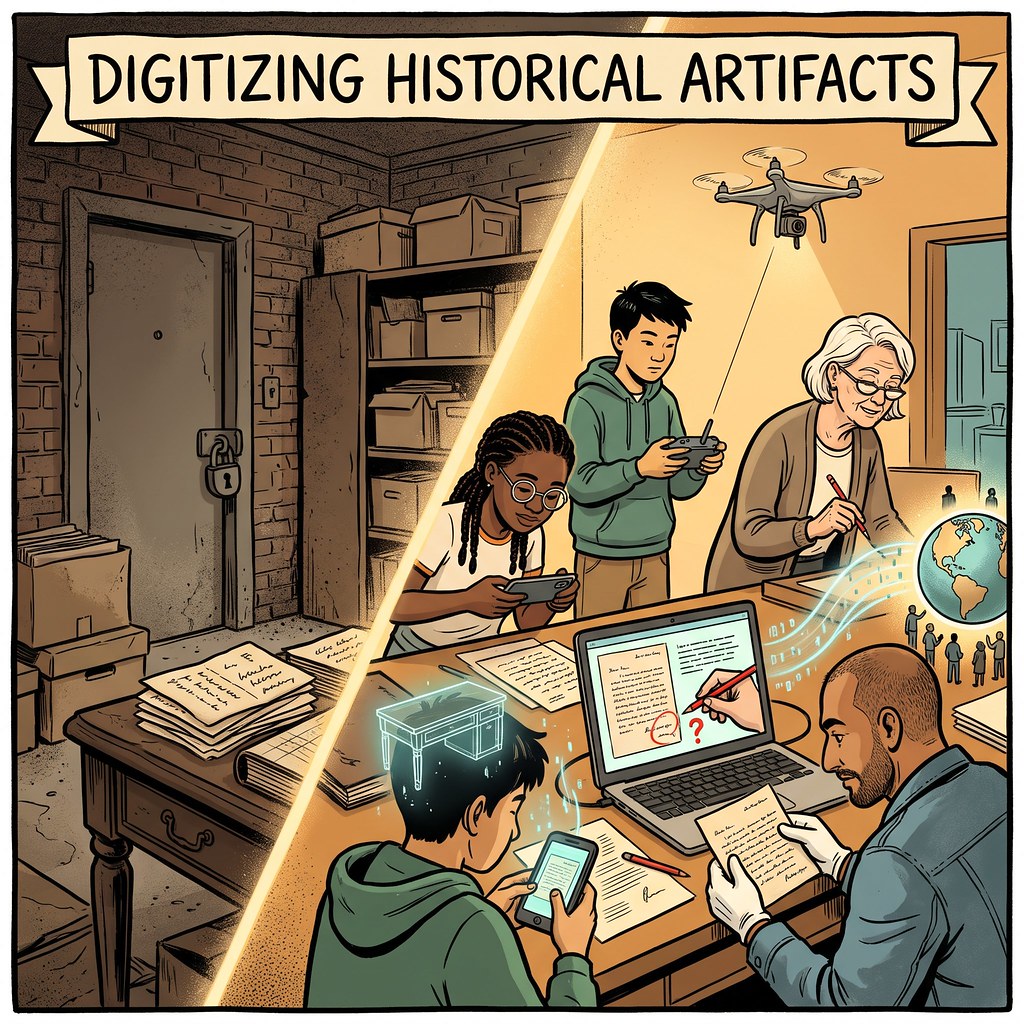
 Many historical buildings and artifacts across the country are hidden, preventing exploration by anyone not nearby. In Corinna, Maine, a collection of letters, legal papers, and more than 6,500 books has been closed to the public since 1910. Student teams with phones, drones, and AI tools are now changing that.
A worthwhile project for schools everywhere is to digitize these historic items and documents. But speed raises questions. Who verifies an AI transcription of a nineteenth-century letter? What should go online, and who decides? How can schools partner with museums and archivists so digitizing protects originals instead of putting them at risk?
Join the MediaEd Club to learn the methods Kern Kelley and his students have used to transcribe written documents, model physical objects using photogrammetry, and scan entire buildings to share worldwide. Then we will discuss how a school, library, or historical society near you could begin.
Date: Monday, December 7, 2026
Time: 12 pm EST | 6 pm CET | 10:30 pm IST
LOCATION: Register here for the webinar series.
SIGN UP here to receive our newsletter with updates and details on media club, webinar series, and teaching resources.
Recommended Media (please preview before attending)
- Conference Slides: Capture Historic Artifacts with Students by Kern Kelley (ACTEM 2026, 15 Oct 2026)
- Article: How Nokomis Students are Bringing Corinna’s History into the Digital Age (The Cattail Press, April 10, 2026)
- Website: Levi Stewart Private Library Museum
- Website: Levi Stewart Museum Artifacts, 3D captures of the building, desk, and other items (Levi Stewart Museum, undated)
Optional Media (enrich your learning)
- Video: EdTechSR Ep 373: Digitizing Local History (YouTube, EdTech Situation Room, live May 6, 2026) - Kern’s project runs from about 7:30 to 22:00.
- Show notes: EdTechSR Ep 373: Digitizing Local History (EdTech Situation Room, live May 6, 2026)
- Tool: Google Workspace Studio (Google) - "Automate your work with Gemini: Streamline and manage tasks across Workspace"
- Tool: Data Studio (Google) - "Data Studio returns as new home for Data Cloud assets" (Google Cloud blog, 10 April 2026)
- Article: LiDAR vs. Photogrammetry: Which 3D scanning method is right for you? (Polycam, May 19, 2026)
- Journal article: Transforming scholarship in the archives through handwritten text recognition: Transkribus as a case study (Journal of Documentation, 2019, Seaward, Terras, Muehlberger, et al.)
- Journal article: The Use of Generative Artificial Intelligence in the Digitisation of Printed and Manuscript Documents and Its Contribution to Historical and Archival Education (Pedagogika, Vol. 75, No. 4, 2025, Rybenská and Sklenářová)
- Journal article: ‘Making such bargain’: Transcribe Bentham and the quality and cost-effectiveness of crowdsourced transcription (Digital Scholarship in the Humanities, Vol. 33, No. 3, 2018, Causer, Grint, Sichani, and Terras)
- Blog Essay: Gemini as Transcriber?: Artificial Intelligence and Documentary Editing (Taylor-Fillmore project, American University, undated)
- Webinar video: AI-Assist in FromThePage: Using HTR in People-Centered Transcription (FromThePage, Ben and Sara Brumfield, March 19, 2024)
- Video: Top 5 AI Tools for Transcribing Handwritten Historical Documents (Family Tree Webinars, Nicole Elder Dyer, September 2, 2026, about 66 minutes)
Host: Dr. Wesley Fryer
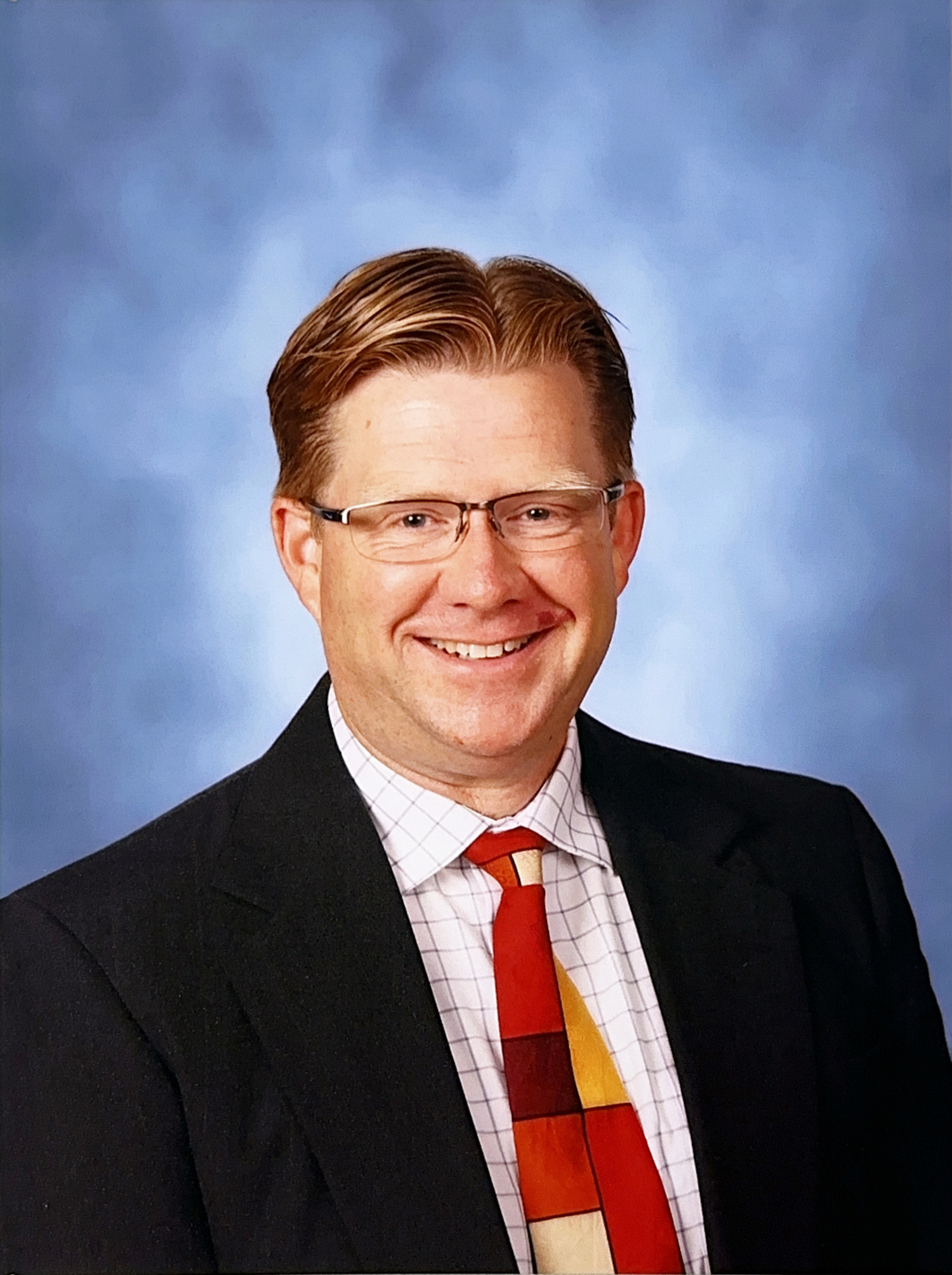 Wesley Fryer, PhD, is a middle school STEM and media literacy middle school teacher at Providence Day School in Charlotte, North Carolina. As an educational technology “early adopter / innovator” since the late 1990s, Wes continues to share regularly on social media. Learn more on wesfryer.com.
Please get in touch with us if you want to suggest future Media Club meeting topics to discuss an article, book, podcast, video or any media related to our interests.
Dr. Wes Fryer, Webinar Series Manager | wes.fryer@providenceday.org
* AI Image (for this webinar) generated by Wes Fryer using Claude AI (for the prompt) and Gemini AI.