Written by Marco Britto
Not so long ago, in the 20th century, journalists were highly appreciated for their capacity to organize and distribute information, uncover the mismanagement of public funds, and analyze the latest trends in culture. With the digital tools available today, any interested citizen can do that with a little bit of goodwill—at least in theory. The rise of influencers is an example that taught us that, for better or worse. So, what is the role of the journalist these days?
Well, as a journalist myself, I would say that it is pretty much the same as it used to be, but with some important updates. As much as an influencer may share information and sometimes engage with public issues, journalists are the professionals specifically trained and educated to do so. But the influencers’ example brings a question worth observing: with a smartphone in hand, today you can do almost everything a newsroom does. You research and produce content. You publish it. You monetize it.
Things are moving so fast in communication technology that lessons I learned professionally ten years ago now fit perfectly into high school students' routines when it comes to evaluating information as true or false, or going deeper into a story they heard on Instagram.
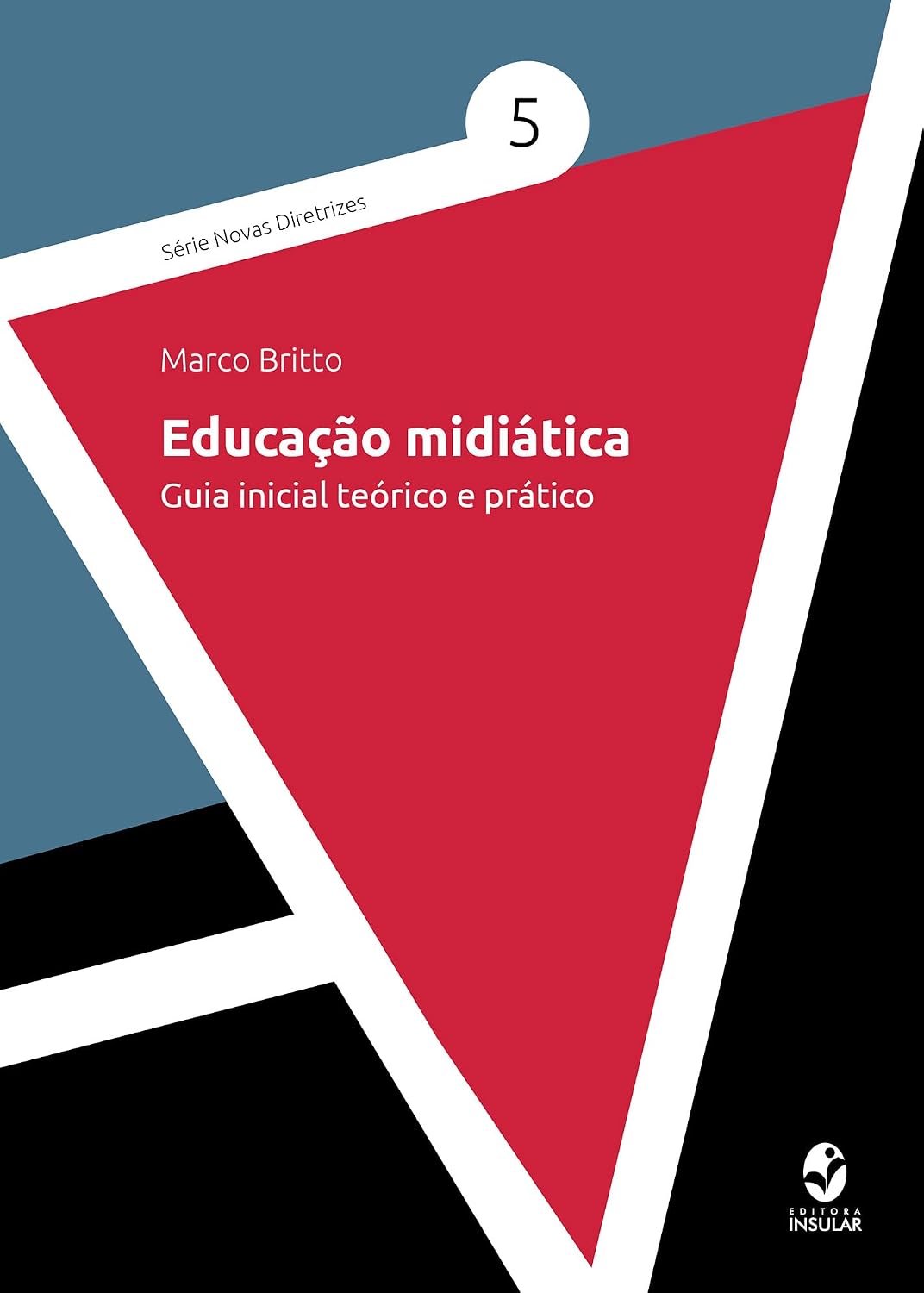
In the media education activities I develop in Brazil, I have witnessed this firsthand, and it made me realize that these young people could use some formal training. But not to become journalists—rather, to be regular citizens of the 21st century! I no longer see journalism just as a means to get information, but as a source of knowledge necessary for society to navigate the digital world. My first approach to this task is now available in my book, “Media Education: An Initial Theoretical and Practical Guide.” (Available only in Portuguese)
One important thing: while tools matter, the most distinguishing quality of having a journalist in the room is the ethical framework for dealing with information. That’s the crucial part of our lab lessons, and what makes this, in my view, a clear call for journalists to start thinking of themselves as teachers more often.
So, what’s in the book?
My starting point is to provoke fellow journalists to think about this potential new role in society as media education teachers. However, I also think about teachers from other fields who want to dive a little deeper into the media education universe. To support them, I have gathered some essential theoretical references, highlighting perspectives such as educommunication (the South American media education school initiated during the 1960s–1970s military dictatorships), media literacy (US-Canada), and media education itself (UN-UK).
My goal is to help beginners take that first step. At least in Brazil, where I live, we are currently at a critical moment: media education is urgently needed, and the government is trying to give it a push, but as a massive country, we are struggling to scale it up by training teachers and raising public awareness. Therefore, I am urging my colleagues to join in!
Media education in practice
The second half of the book brings practical examples taken from my experience running media education labs with high school students. Working alongside a Sociology professor, I adapted some of her classes into media education lessons. We merged content about classical thinkers like Machiavelli with breaking news about the war in Iran, and looked into algorithmic functions through the lens of Michel Foucault’s theory of micropowers. Did you know that influencing your friends is a micropower?
Foucault's panopticon theory, on the other hand, serves as a great bridge to discuss how social media monitors our habits to suggest targeted ads and profiles to follow. In other classes, we discussed globalization and soft power using a YouTube video featuring BTS and Joe Biden; we also investigated political campaign budgets while learning about the electoral system, and so on... I hope these examples can inspire others to create similar exercises.
Don’t forget to assess the activities!
This is a crucial issue: assessment. The more data we have showcasing that media education actually works, the stronger our argument will be to launch new projects and convince school principals, faculty coordinators, and executives in both the news and education industries that this is an investment worth making.
There are several methods available, and for this book, I used the Stanford History Education Group's (SHEG) rubric approach (the team that founded SHEG is now Digital Inquire Group (DIG), an independent organization that continues to provide us with amazing data and theoretical frameworks).
In the end, it became very clear to me that the skills journalists learn are precious assets when formulating media education lessons—especially if you work with the “layer method” as I did, embedding media exercises and discussions directly into existing curriculum subjects like English, History, or Geography. It is an important role that can reframe the relevance of journalists in society while tackling some of the greatest challenges of our time.
About the author
Marco Britto is a journalist who has worked in some of the main newsrooms in Brazil, like UOL, Estadão, and Editora Globo, as reporter and editor. Over the course of his 20-year career, he has interviewed presidents and government ministers, covered the inner workings of power in Brasília, the nation’s capitol, and, more recently, produced reports on climate change and its impact across various sectors of society. As a researcher within the PPGJOR-UFSC graduate program, he explores the potential synergy between media education and journalism, advocating for greater engagement by journalists with this field. In his applied research, he develops media education and news literacy workshops for high school students and examines assessment methods, seeking to translate learning outcomes into data.
Comments(0)