When our three weeks in Italy came to an end, our family didn't head home. We flew north instead: from Renaissance marble and Tuscan hills to the long summer light of Oslo for me to officiate the wedding of my former PhD student.
There's a particular kind of pride that comes from watching someone you mentored move through the world. You see them defend a dissertation, you see them find their footing professionally, and then one day they ask you to stand with them at the moment their life changes shape. Saying yes was easy. Figuring out how to do it well took real thought.
A Venue with 800 Years of Memory
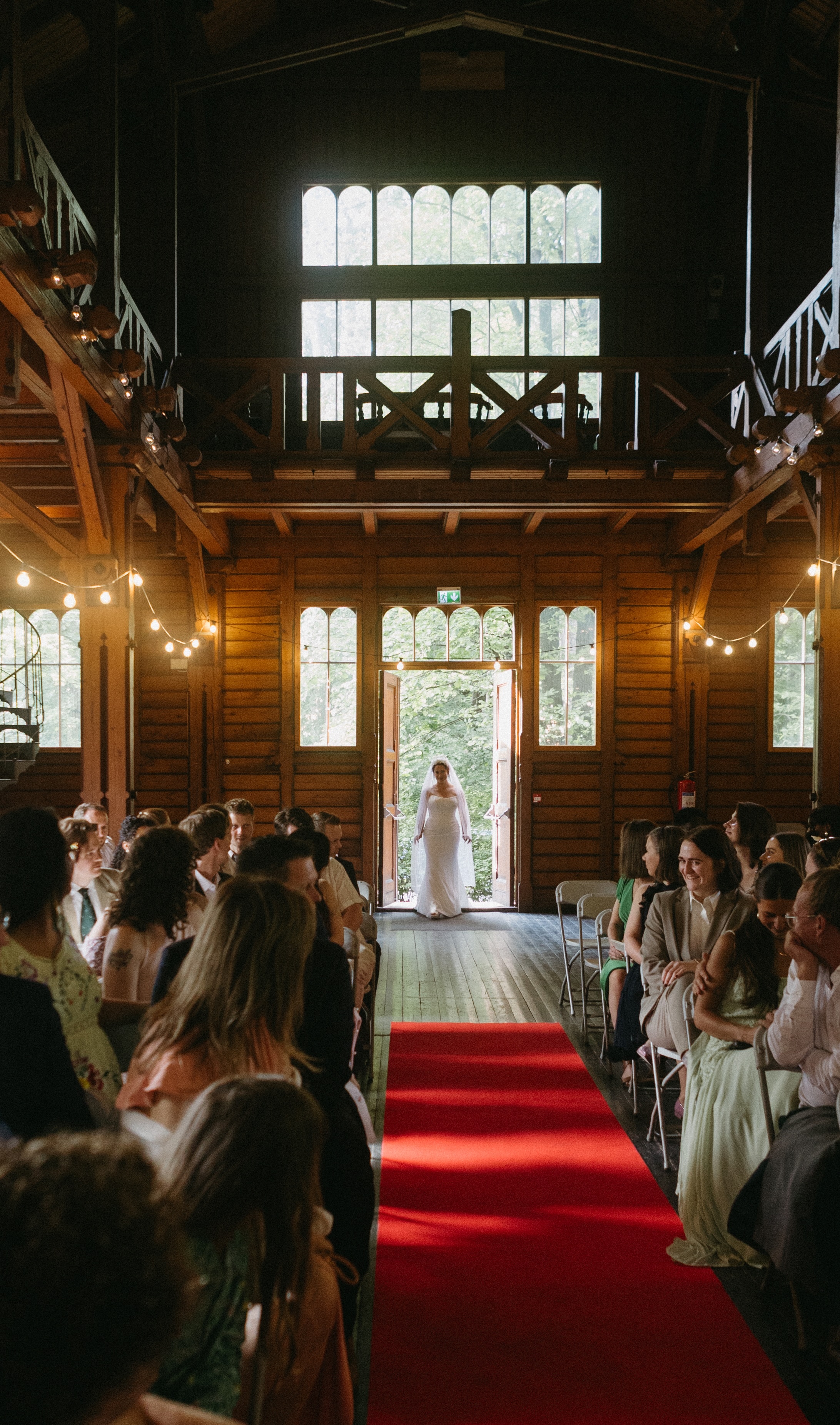 The ceremony took place at the Norwegian Museum of Cultural History (Norsk Folkemuseum) an open-air museum in Oslo that gathers buildings from across Norway's regions and centuries into one living landscape. The space where we gathered has hosted weddings for more than 800 years. Standing in it, you feel that weight in the best possible sense: you are not inventing a ritual, you are joining one that has been running continuously since long before any of us arrived.
What made the day extraordinary wasn't only the history of the place, though. It was who filled it. Guests had come from all over the world, carrying different languages, different faiths, different assumptions about what a wedding is supposed to sound like. That's a real design challenge for an officiant. You want everyone in the room to feel that the ceremony belongs to them too, not that they're politely observing someone else's tradition from the outside.
Weaving Two Traditions Together
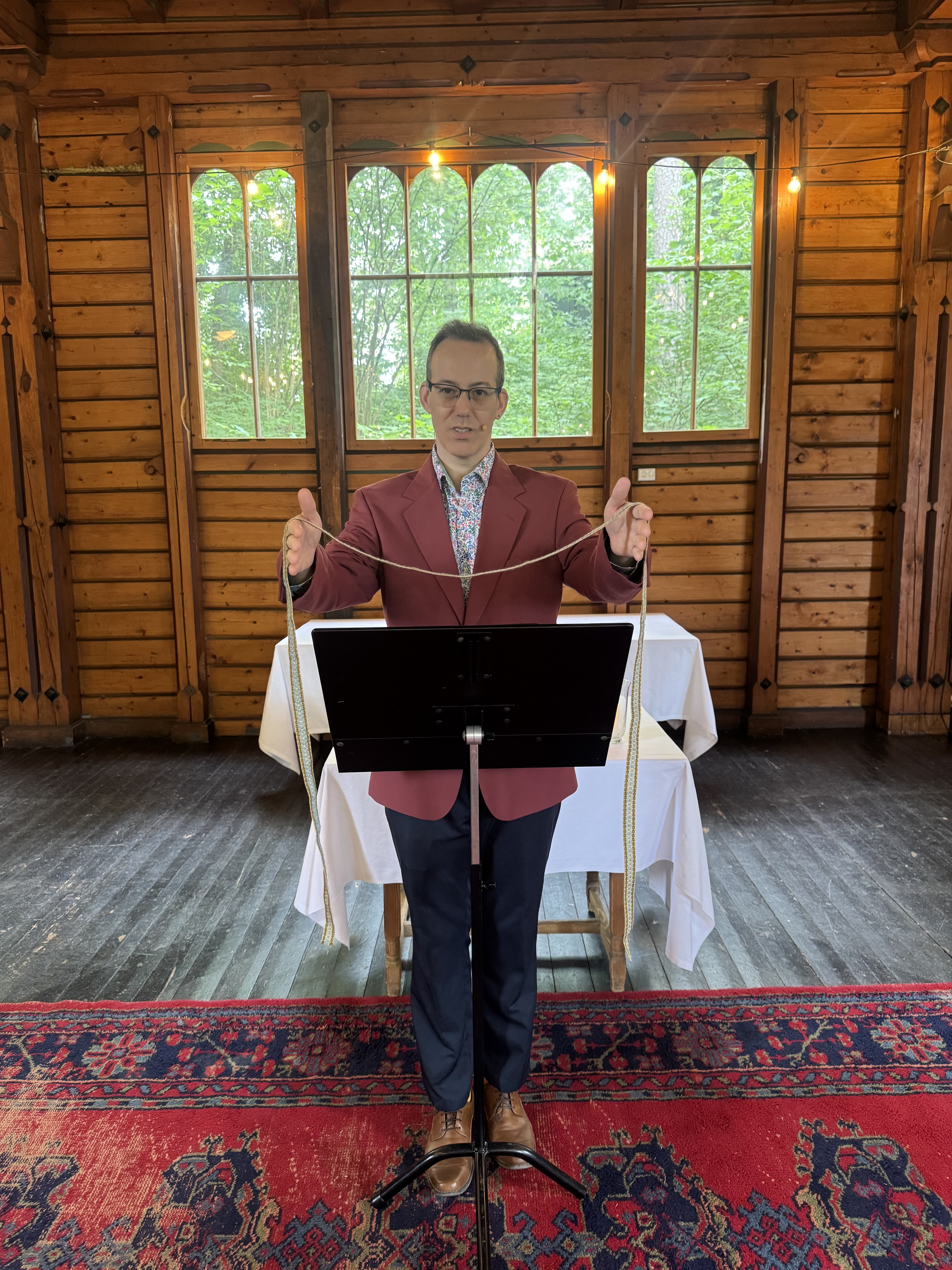
 I approached the ceremony from a secular and humanistic Jewish practice, a framework I find enormously generous, because it treats tradition as something to draw meaning from rather than something to obey. It asks what a ritual is for, and then invites you to honor that purpose honestly.
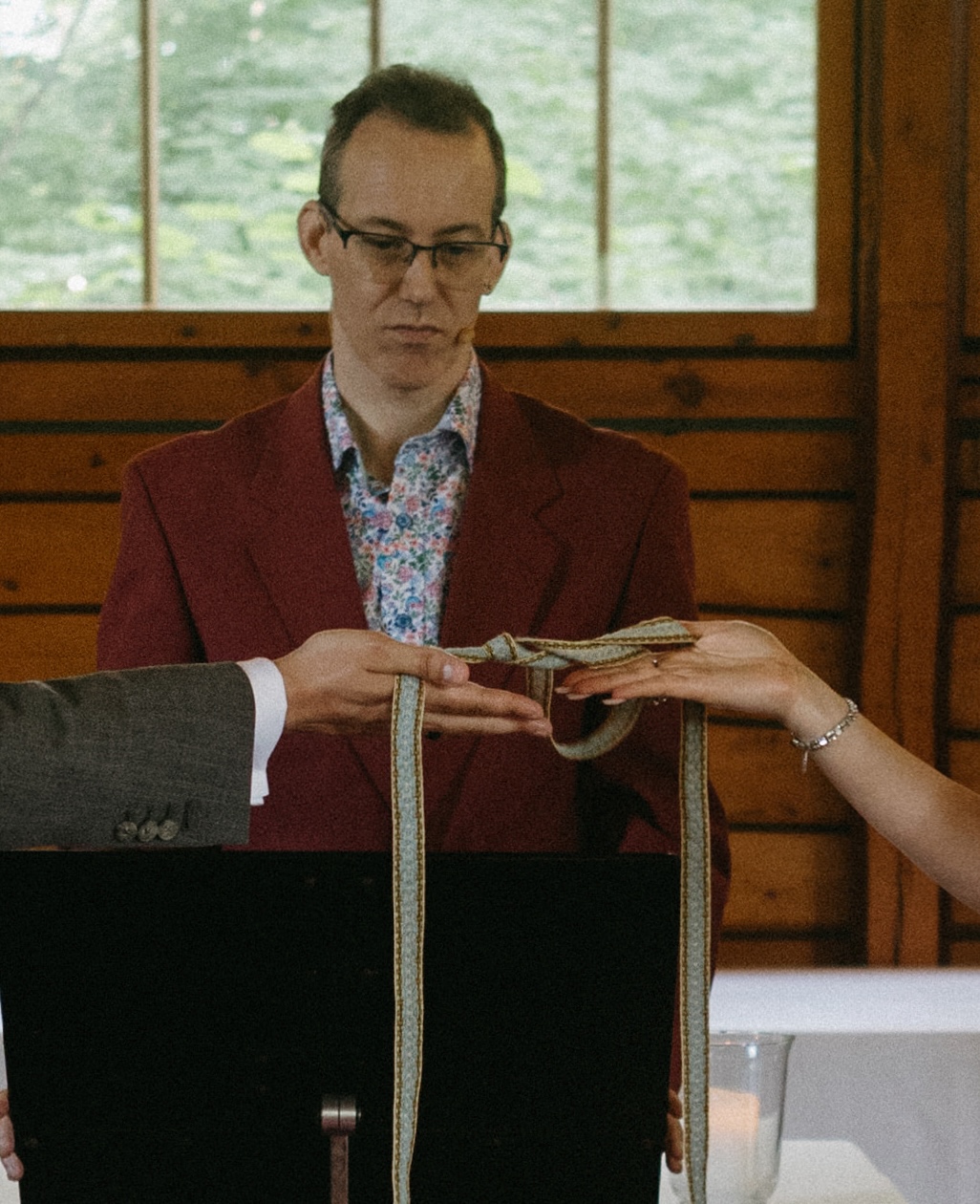
So we made a decision: we would combine the Jewish tradition of the Sheva Brachot (the Seven Blessings) with the European tradition of handfasting, the practice that gave English the phrase "tying the knot."
The pairing worked better than I'd hoped. The Seven Blessings move outward in widening circles: from the couple, to joy itself, to community, to the world. Handfasting does something quieter and more physical, a cord wound around two joined hands, a knot made in front of everyone watching. One tradition speaks the meaning aloud; the other makes it visible and tactile. Together they said the same thing twice, in two different registers, and nobody in the room needed a translation to understand what was happening.
That's the argument for intercultural ritual in a nutshell. It isn't dilution. Done with care, each tradition makes the other more legible.
 A Phrase in Hebrew
At the end of the ceremony, I wanted to offer something in my native language. Hebrew is where my own sense of blessing lives, and it felt right to give the gathering a piece of it.
I told them: "I would like to share a phrase in Hebrew, my native language: To love across languages is to discover a truth no single word can hold."
I meant it about this couple specifically, but I also meant it about the room. Everyone there was doing some version of that work; reaching across a gap in vocabulary, in custom, in history, and finding that the reaching itself was the point.
Munch, and the Weight Behind a Painting
 With the wedding behind us, we became a family of tourists again.
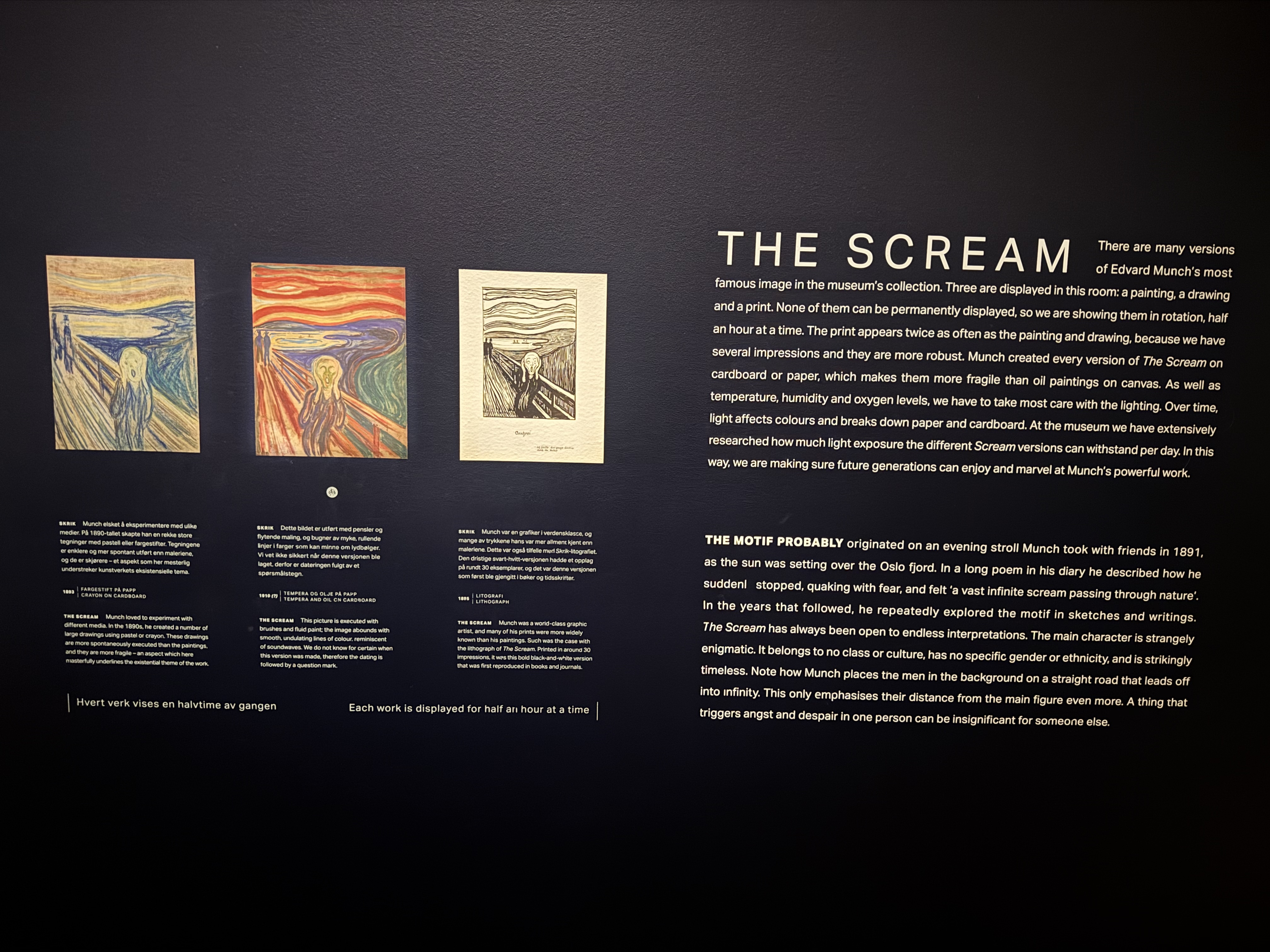
We went to the Munch Museum, thirteen floors of Edvard Munch alongside rotating exhibitions of other artists. The museum holds three versions of The Scream: the painting, the drawing, and the lithograph. All displayed in rotation in a dedicated room, each one a variation on the same 1893 vision.
What I didn't expect was how much time we would spend talking about Munch's life rather than his technique. My kids wanted to know why someone would paint like this. So we talked about the illness and loss that ran through his childhood and adulthood, and about how you can look at a canvas and see grief organized into color and line. Watching them make that connection; that a painting can be a record of a person's suffering, not just an image, was one of those parenting moments you don't plan for.
 A City That Makes Room for Nature
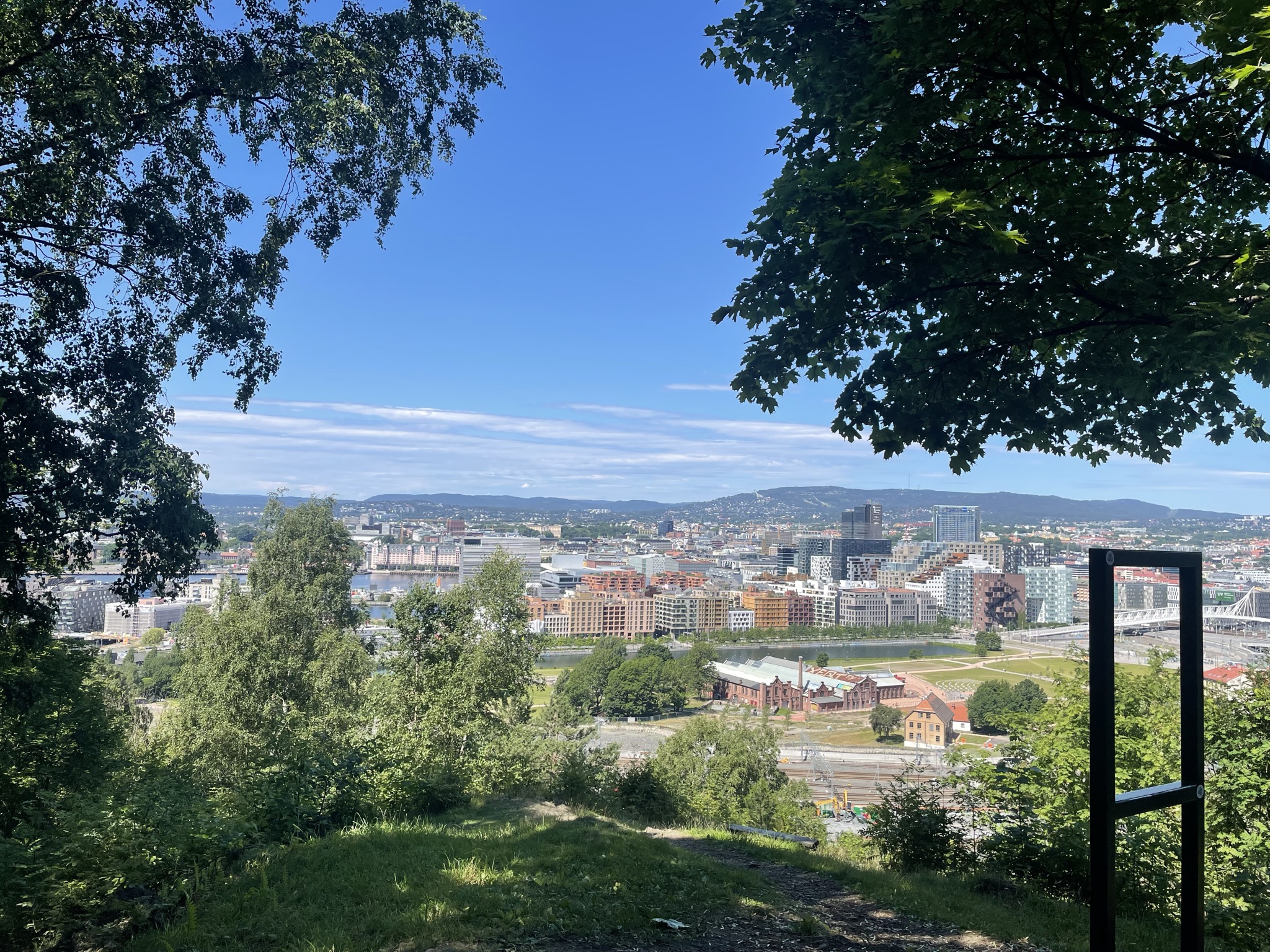
We happened to be in Oslo during two festivals at once: the Pride celebrations filling the center of town, and a rock festival up at Ekeberg park. The city was loud, warm, and unmistakably itself.
For the kids, though, the most fascinating thing about Oslo was structural. They noticed how much room the city gives to nature: how forest and water and open green aren't leftovers squeezed between buildings but genuine partners in the urban plan. That reads as a deliberate philosophy rather than an accident of geography.
Nowhere is that clearer than in Vigeland Park, where Gustav Vigeland placed more than 200 of his sculptures across the landscape. The whole park is a single sustained argument about human life: bodies at every age, in every relation to one another, arranged as a kind of walk through the evolution of humanity. You don't visit it so much as move through it. My children spent a long time in front of those figures, and they were quiet in a way they usually aren't.
What I'm Taking Home
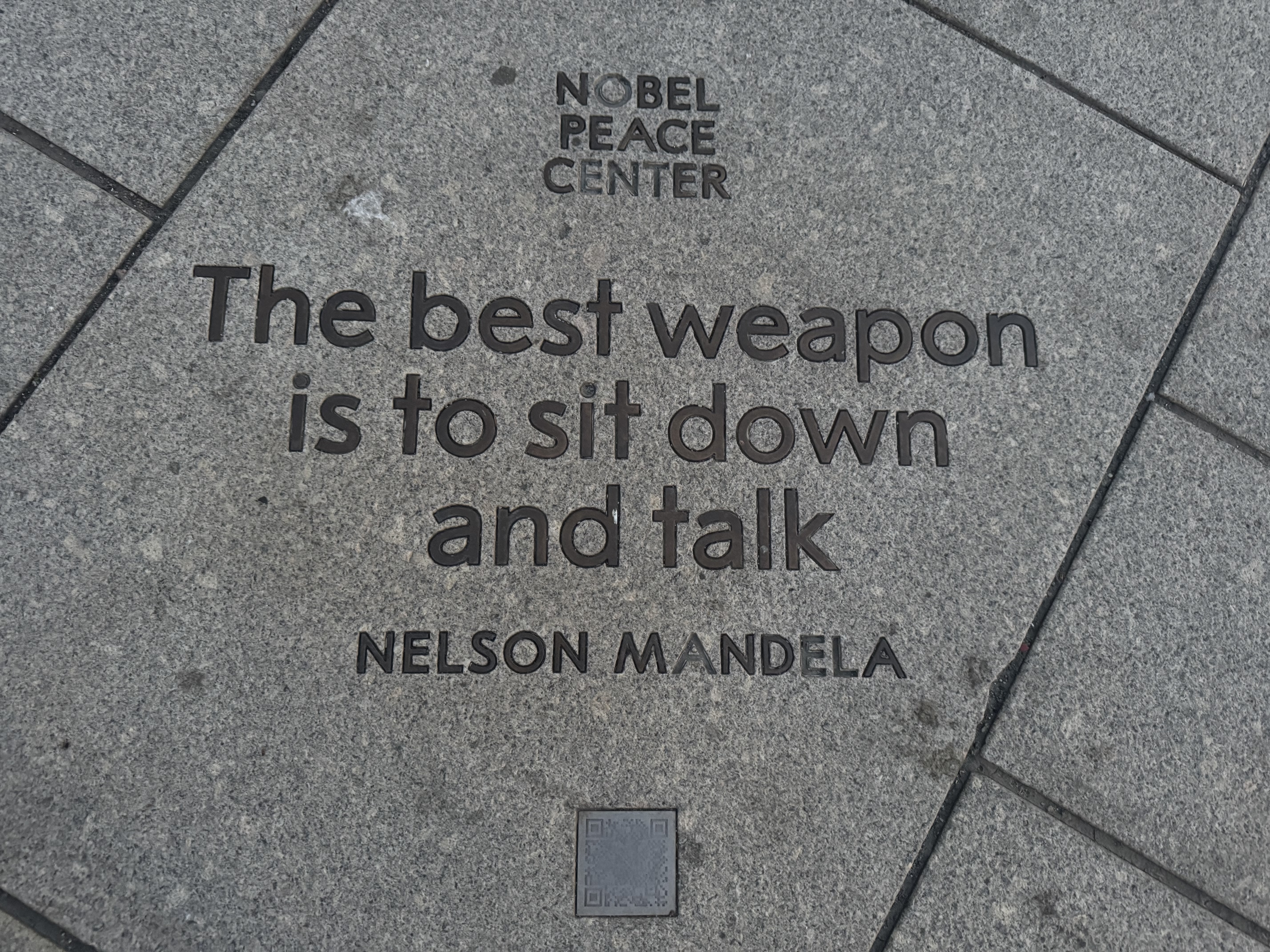 At a moment when so much of the world is choosing war, tribalism, and the hardening of borders, when difference is being treated as a threat to be managed rather than a resource to be welcomed, I spent this summer watching the opposite happen in small, ordinary rooms. Guests from a dozen countries standing together under a Jewish blessing and a Norwegian knot. My kids learning to read a stranger's grief in a painted sky. A city arranging itself around the assumption that people need beauty and open space.
None of that is naive. It's simply evidence. Diversity isn't a cost we absorb for the sake of fairness; it is the thing that makes a life larger! I came home more convinced than ever that our work, whether in classrooms or under a wedding canopy, is to keep insisting on that.
Comments(0)