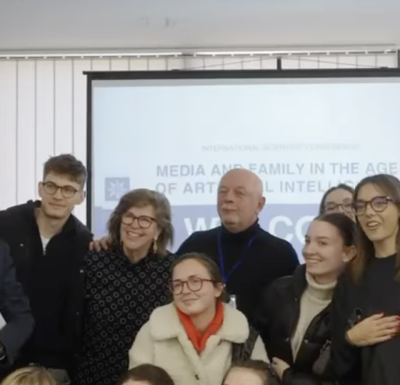
 On December 10, it was a pleasure to offer a keynote address at the MEDIA & FAMILY IN THE AGE OF ARTIFICIAL INTELLIGENCE conference, hosted by the Catholic University of Croatia and organized by Lana Ciboci Persa.
My talk offered a perspective on informal efforts to engage family members (including my husband, daughter, and grandchildren) on topics including algorithmic personalization, data reasoning, and ethical reflection on machine learning. I also shared my ideas about practical strategies for advancing media and AI literacy in schools, including (1) the measurement of student exposure to ML pedagogies as documented in work with the Massachusetts Department of Elementary and Secondary Education and (2) my work in helping to develop the 2029 PISA Media and AI Literacy Assessment.
Because there were a large number of students in the audience, I concluded with the Spotify Media Literacy Challenge, inviting students to use the end-of-year Spotify Unwrapped feature to talk with family members about "what Spotify knows about you" and to reflect on questions like:
📌 How do AI systems “learn” musical formulas and conventions?
📌 Do personalized recommendations make the discovery of new musical genres easier or harder?
📌 Will music streaming services devalue music that isn’t instantly accessible?
📌 How does Spotify affect the incentives for musicians to make money?
📌 In the future, will the work of music critics become more important or less important?
📌 If music streaming services are optimized to promote “more listening,” is that really a good thing?
The conference brought together 40+ researchers and teachers who shared a number of important new insights on how children and parents are experiencing ChatGPT and machine learning. Check out this video overview!
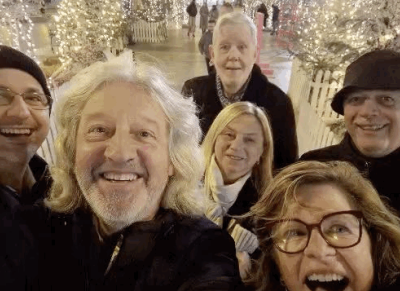 One key highlight of the conference for me was the presence of Pier Cesare Rivoltella, a professor of Educational Technology at the University of Bologna. Back in the 1990s, he was among the very first Italian scholars I met when I first began exploring media literacy around the world. His interdisciplinary leadership at the intersection of communication and education has long been inspiring to me, and in his keynote, he continued to be an inspiration by offering a reflection on how the long history of "truth discovery" has insights to offer on skill-building needed to manage the unreal realities that are part of our experience with life in a digital age. It turns out that we both have guarded optimism about the future!
Children of Media - Djeca Medija
It was simply thrilling to visit the new offices where the leading media literacy organization in Croatia is located. Igor Kanizaj and Daniel Labas have much to be proud of, and they are key players in a number of EU-funded projects, including Algowatch, Teacher Education in Digital and Media Literacy, and Erasmus Plus initiatives. What a strong community they have nurtured and supported!
Of course, I am so proud to be a member of the extended family supporting the Croatian media literacy community. In 2021, the U.S. Embassy in Zagreb supported a teacher education program I helped develop entitled, "We Play it Safe," which introduced media literacy to elementary educators with focus on algorithmic personalization, games and learning, and issues of privacy and safety.
Since then, Children of Media has developed 50 media literacy projects at the national level, reaching 43,500 users including children, teens, parents, teachers, and librarians with more than 1,500 workshops. They offer an annual "Media Socrates" prize for excellence in teaching media literacy and engage undergraduate volunteers to contribute to the handbooks and social media posts they create for parents, teachers and youth.
Comments(0)