Case Study | MediaEd Insights | Reflections of Doctoral Students Edition | October 2026
Written by Amber Bartlett
The ReDMIL Summer School concluded with an exhibition of performances, short stories, collages and poems, each a creative reflection developed by participants over the course of the week. Together, these works encapsulated the ethos of the Summer School: participant-centred dialogue, critical perspectives and commitment to creative modes of knowledge production.
My name is Amber I Bartlett, and I am a third-year PhD researcher at the Centre for Language Studies at Radboud University, investigating the role of digital literacies in refugee resettlement, with fieldwork conducted among women seeking asylum in the Netherlands. I applied to the Summer School seeking to engage with a community of scholars working with participatory and co-creative methodologies,
particularly those oriented towards increasing critical digital literacies, and who recognised the significance of media literacy across a wide range of pressing social issues. The week fulfilled these expectations.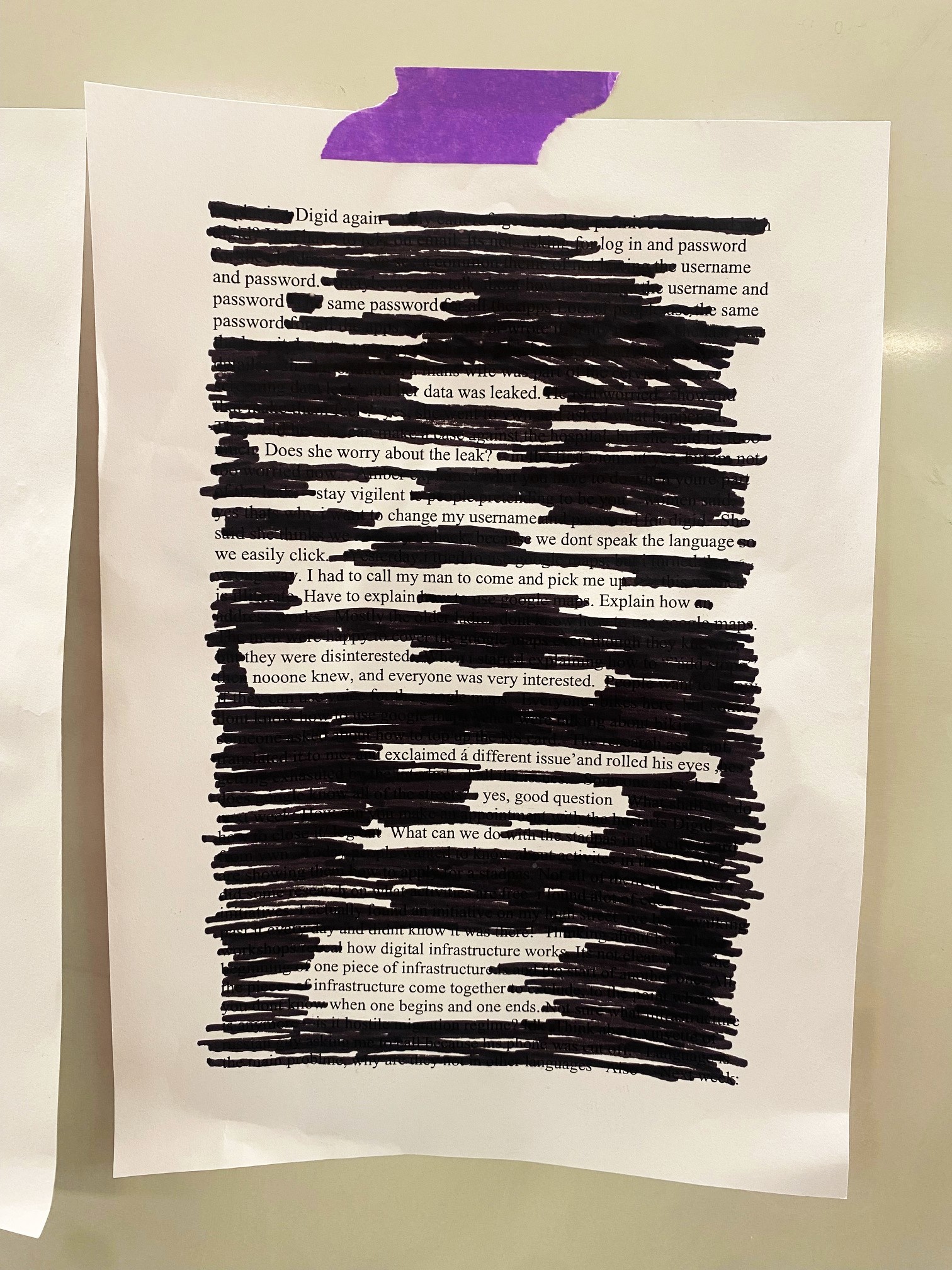
From the outset, the programme centred participants' research. It opened with two poster sessions, which enabled us to familiarise ourselves with each other and our projects. These sessions already started an engaging dialogue, and established a shared awareness of the group's research interests that informed discussions throughout the week. The following days' programme was predominantly made up of participants' presentations, with four important expert contributions from Hyeon-Seon Jeong, Renee Hobbs, Jad Melki and Maarit Jaakkola, each highlighting a different approach to research to push our thinking further. Each participant was allocated a full hour to present their project, and the feedback was consistently rigorous and constructive, from both peers and the invited guests. It was such a unique opportunity to have such an extensive and in-depth discussion for each presentation. The feedback I received on my own project focused on the ethics of care in research with marginalised populations, particularly in relation to reciprocity, anonymity and data protection. These discussions allowed me to reflect more critically on how these practices can be implemented in my project.
Conceptually, a recurring theme was digital media literacy as both an outcome in itself, and a mediating agent, which can be used as a tool to address so many of the dominant issues we’re currently facing. Being reminded of this reaffirmed and energised me about the potential of my research and the research field more broadly. There was collective agreement on the need to move beyond deficit-based approaches towards an understanding of literacy as social practice, which acknowledges multiple literacies and foregrounds the importance of critical literacy development. Rather than imposing top-down definitions of "good" media use, we need to prioritise understanding how everyday users engage with digital media, what matters to them and what they want to get from their use of different platforms and devices.
Sharing a room with so many researcher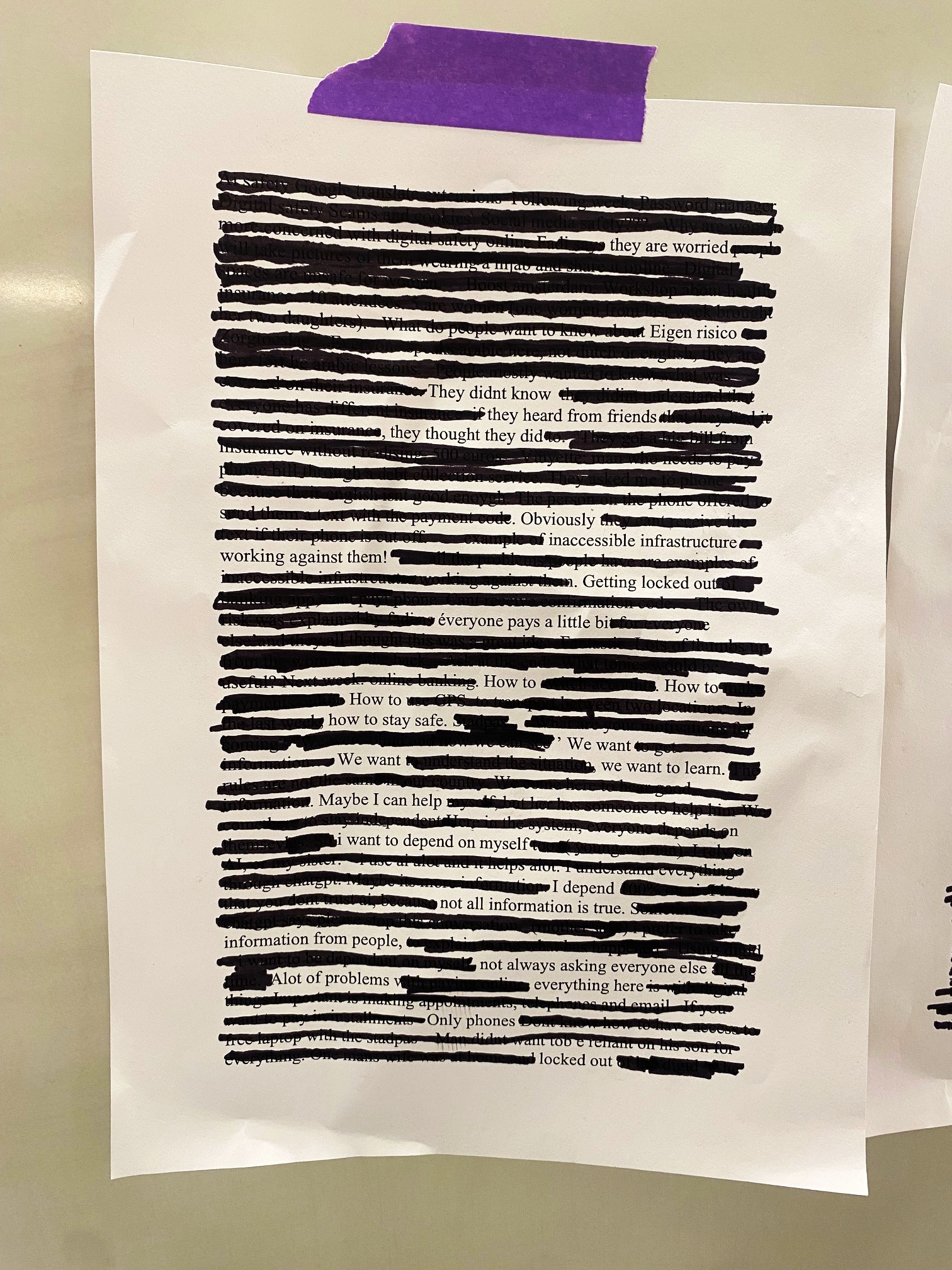 s committed to co-creative and action-based research was also a very unique experience. It made it possible to move beyond co-creation as a buzzword and address the practicalities of these methods, openly discussing their challenges while recognising the value and importance of this work.
Normand Landry's workshop invited us to think about how we can integrate creative practice into our knowledge production. Each day, we set aside a few minutes to work on an individual creative reflection, building in insights from that day's programme, and these reflections formed the final exhibition. For my contribution, I created a blackout poem using the transcripts from my interviews. The process helped to defamiliarise transcripts I had come to know well, and I began to notice things I had previously overlooked. Notably, I noticed how frustrating and repetitive digital exclusion is in the lives of the women I interviewed. It is not a single barrier they encounter, but a monotonous succession of small blocks, each seemingly minor but cumulatively wearing people down. This was an important insight I will bring into my analysis, and I would highly recommend this technique to other researchers looking for a new way into their own data.
I am grateful to the organisers of the ReDMIL Summer School, especially Jerry Jacques, Pierre Fastrez and the rest of the team: Arnaud Claes, Marie MacDonough, Laureline Marc, Caroline Robbeets, Laura Zander. Louis Amant, Camille Blondiaux, and Ling Leung; for creating such a generous and welcoming space. I am also grateful to my fellow participants for their insight and feedback and to Yonty Friesem and Renee Hobbs for the opportunity to share these reflections. Like the exhibition that closed the week, the Summer School demonstrated how much our work can benefit when research is approached critically, collectively and creatively.
MediaEd Insights | Reflections of Doctoral Students Edition Edition | October 2026
Opening Essay: The ReDMIL Doctoral Summer School at Ten: A supportive approach to Doctoral Research on New Literacies by Jerry Jacques and Pierre Fastrez
Case Study: The Media Literacy Melting Pot at ReDMIL Summer School by Kawtar Arahmouch
Case Study: Reflections on Creative and Critical Approaches to Digital, Media and Information Literacy at the ReDMIL Summer School by Amber Bartlett
Case Study: My Experience at RedMIL by Joseph Di Vincenti
Case Study: The Letter None of My Respondents Wrote: What a Creative Workshop at the ReDMIL Doctoral Summer School Taught Me About Sharing Research by Mariana Grépinet
Comments(0)