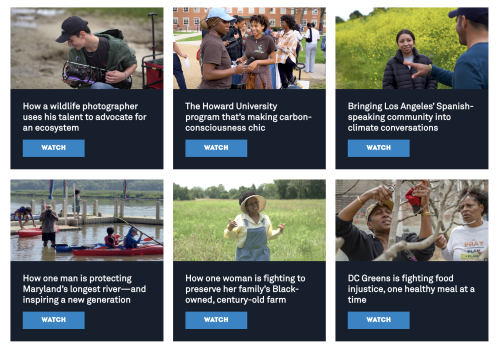
 It was 16 years ago when I first learned about Student Reporting Labs, the initiative developed by Founder and Managing Editor Leah Clapman of PBS NewsHour. She invited me to conduct an evaluation of PBS NewsHour Student Reporting Labs (SRL), a hands-on student journalism training program that connects young people to real-world experiences and educators to resources and community. The program offers young people the tools and training to report stories, lead conversations about the issues that affect their future, and recognize their power as journalists and as members of their local communities.
Back in 2011, the Media Education Lab conducted the 3-year program evaluation which involved multiple assessment strategies, including viewing student productions, conducting qualitative interviews with participants, observing and documenting teacher professional development sessions, and conducting online survey research with students participating in the program. We measured changes in student media behavior, attitudes, and learning outcomes using a combination of scaled multiple-choice items and performance-based tasks. I’m proud to have mentored Katie Donnelly, Yonty Friesem, and Mary Moen on this research.
At the time we started work, the program involved more than 50 schools and community centers across the country, with each site adapting the program to meet the particular educational needs of its students, faculty, and community. Findings from the longitudinal study conducted with nearly 500 high school students who participated in the program revealed that
- Media production skills involved students in gathering and synthesizing information, using digital media and technology to communicate ideas in the format of a broadcast news package, and engaging in cycles of revision and feedback;
- Students increased their collaboration and teamwork skills, intellectual curiosity, the ability to give and receive feedback, and confidence in self-expression and advocacy.
- They improved media analysis skills and grew increasingly more selective in their own media use choices, with a shift towards preferring high-quality news sources over entertainment-type news.
- They became more civically engaged, increased their commitment to civic activism and engagement activities, particularly ones that are digital and collaborative, and some developed an orientation toward journalism careers.
It was (and still is) the first large youth journalism program developed by a major news organization. Indeed, it is the premiere program in the United States. In the 2023 - 2024 school year, more than 70,000 students were involved in publishing 179 stories, with 14 of them airing on PBS News Hour. Click here to learn more about the program.
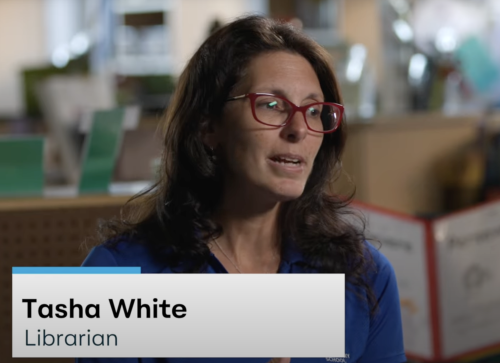 For this reason, it was sweet and satisfying to watch PBS NewsHour recently and see a feature story on the students at Lima Elementary School in Providence, Rhode Island, where one of my former students, Tasha White, has developed a media literacy program where children learn to create news. Here, fifth graders are redefining what local journalism looks like. These bilingual reporters write, film, and produce a weekly newscast in English and Spanish — covering everything from school events to interviews with Rhode Island’s governor and the city’s mayor. Tasha is a force of nature --and her vision is compelling: check out this wonderful feature video to see how librarians change lives!
Comments(0)