Rock ’n’ Roll Camp for Girls: An excerpt from "Sun Shining on Morning Snow"
Written by Ingrid Hu Dahl
A Book Excerpt | MediaEd Insights | Music Education Edition | March 2026
As I wrapped my final semester of graduate school and my two-year work contract, I had one thing left to do to
graduate: select a summer practicum—a six-week, on-the-ground experience that would culmin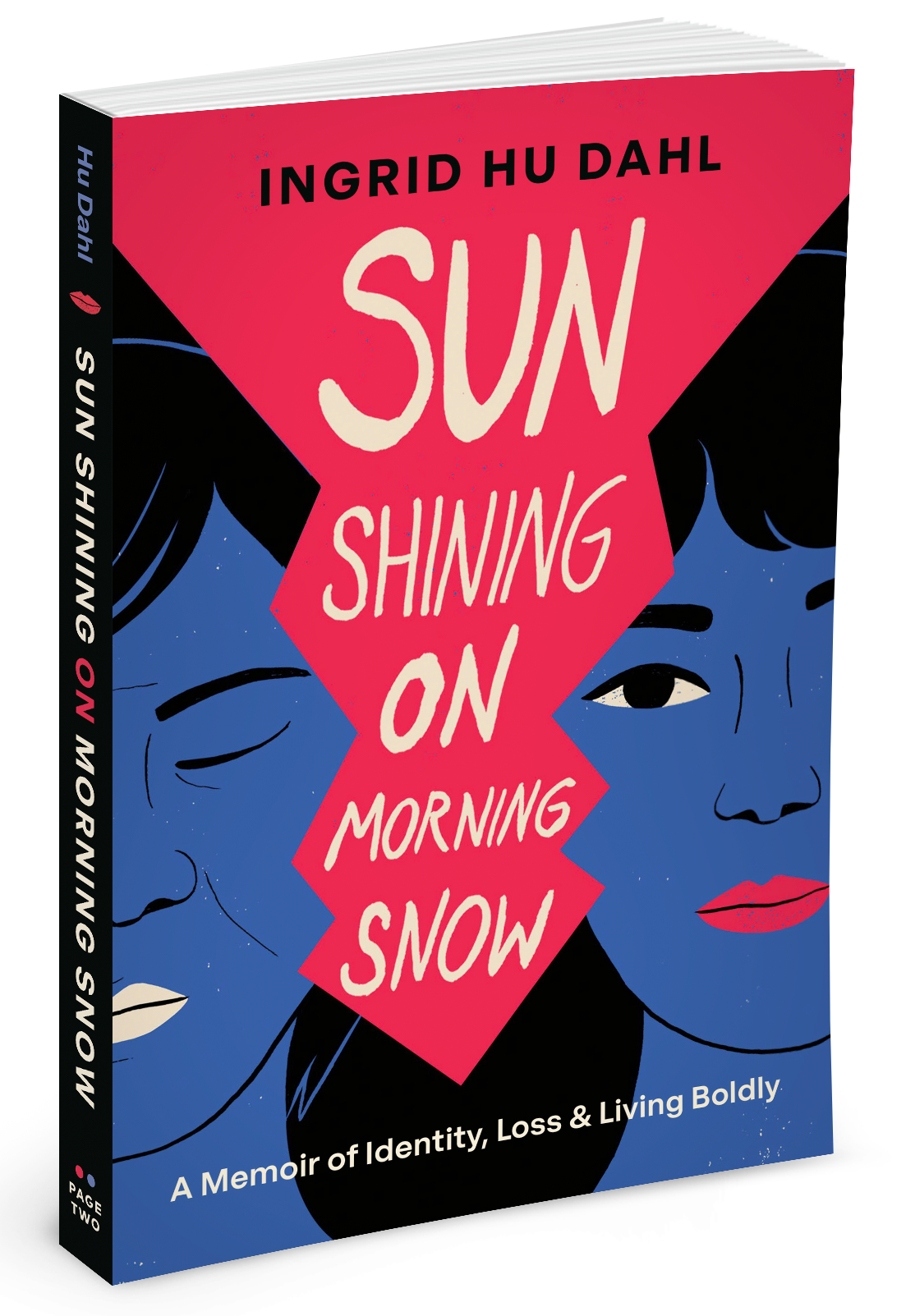 ate in writing yet another thesis. I was curious about the statistical drop in preteen girls’ self-esteem and wanted to experiment with what might combat that, address their needs, remove the mean-girl culture, and create an experience that would draw on their collective power, resistance, and rebellion—a.k.a. confidence. As I was running out of time and options, a friend mentioned a rock ’n’ roll camp happening in the Northwest. Thank you, universe.
In 2001, the Rock ’n’ Roll Camp for Girls launched in Portland, Oregon, drawing hundreds of girls aged eight to
eighteen to apply. Just as many female musicians signed up as band coaches, mentors, and performers. These week-long sessions offered 50 percent of the attendees financial aid scholarships.
In 2004, I reached out to the founder who welcomed me to join the camp’s summer programs. I packed up my
belongings and flew to Portland. I had never been to the Northwest before. I answered a Craigslist ad to sublet someone’s room while they were out of town. The timing was perfect, and the apartment was located biking distance from the camp. The camp founder picked me up from the airport, but as we pulled up to the address of the apartment, we saw a bunch of punk kids sitting on the stoop. She looked at the house and asked, “You sure this is it?” I checked the address again on the piece of paper I carried with me. It was correct.
“I’ll wait out here, go check it out,” she said. I hesitated, then got out of her van, grabbed my belongings, and walked up towards the punk kids. They nodded when I explained whose room I was renting and one of them showed me the way. I was alarmed by the state of the apartment. It was cold, dirty, and when I entered the room there was a mattress on four cinder blocks. No sheets, towels, or blankets. It was a real shithole.
To say I felt homesick and scared is an understatement. The camp founder offered to let me crash with her
and her girlfriend that night. The next day she gave me a set of sheets, towels, and a loaner bike so I could return to the dilapidated apartment. I was so thankful, and she reminded me that I was offering my services all summer for free. What I didn’t realize is how much the camp would give back to me tenfold.
One week before the first camp session launched, I reviewed the applications of admitted attendees with another mixed-race staff member, and we realized that 30 percent identified as multicultural and of two or more races. We considered the opportunity here. What if we created a work- shop that explored identity in a way that was relatable to eight- to eighteen-year-olds? We worked together to come up with a creative approach that provided language for how to talk about sexism, racism, and otherness—language we hadn’t grown up with—and content that explained the purpose and impact of media portrayals of women and girls. Our call to action was to always represent yourself and who you are—your identity. None of us fit in molds. We spent the remaining days and evenings creating a curriculum. We wanted to make sure the workshop combined a depth and simplicity that would be meaningful across the broad range of ages. We knew that our workshop was experimental and groundbreaking. Once camp started, we were given the green light to launch and co-facilitate this new workshop, which we coined “Image Versus Identity.” My co-facilitator and I ran our workshop three times, and it was well received. After one session, an eight-year-old came up to me and said, “Thank you for teaching us about gender dichotomies!” It was electrifying. That workshop would eventually expand globally to more than fifty rock ’n’ roll camps for girls, something we never imagined.
That first week at Rock ’n’ Roll Camp was the most empowering experience I’ve ever had with other women. I had never been around so many female musicians and queer women before. The sisterhood, kindness, acceptance, and community were a welcome outpouring after the drought of sustained female connection in my youth. Every female mentor taught music—bass, guitar, keys, vocals, and drums—and coached girls on how to work together to come up with original songs that they’d perform on stage by the end of the week. Other activities included attending workshops about the history of women in rock, watching mentors’ bands perform—which was exhilarating and inspiring—and ending each day with positive affirmations and a dance party.
One mentor taught a workshop on self-defense. I had to run out the door and gasp for air after half of the teen girls shared their experiences of sexual abuse and rape. It was so deeply painful. For many, it was the first time they had ever told anyone about what they’d experienced. The safe space camp generated was full of respect, care, recognition, and friendship. Camp was a unique bubble that left the socially constrictive dynamics of gender, identity, and other norms outside. Girls who entered with low self-esteem became powerful onstage and glued to the mic. They felt heard, their voices encouraged and newly amplified among new,
supportive peers and mentors. We taught them to see the mic as a tool, to get so close that they could almost swallow it. Nothing else in their lives—or in our lives as mentors—offered an experience like rock camp.
On the Saturday that concluded camp, each new band performed their song at a local venue with the entire camp community and their families cheering them on. Guiding a newly formed band to write a song together was one thing, but being their trusted cheerleader and conductor at the base of the stage, encouraging them through every second, was even more joyful. I witnessed the buildup of doubt before each performance. I saw that in my own experience as a young musician. But having camp friends and mentors cheering you at the front of the stage pushed doubt and pressure of perfection out of the way. It might have been the highlight of their young lives. At camp, you learned the truth and what really matters in a trusting and caring environment. And in that love, rebellion, and dynamic of coaching and learning, we witnessed transformation. Years later when I managed teams, I’d be asked by other leaders why I took on such a cheerleading approach. No matter our
age, as adults we’re still young kids onstage, performing.
Our careers, our lives, can feel like a performance, one with fear, doubt, and insecurity. We can even feel like we’re acting a part or role in a play. Having a coach enter that space without judgment—to explore, to encourage, to question—can spark opportunities for possibility, unlearning, truth, and getting our confidence, voice, and power back. And all that can happen within a short span if we’re immersed in that experience and feel it in a deep, groundbreaking way. I learned that at camp.
Watching the girls at rock camp transform throughout the week had a major effect on all of us mentors and
volunteers. It gave us hope for a different reality than we experienced as women and girls. Being there was a way to give the next generation what we never had and revel in it, together. Rock camp was an oasis. The catharsis I felt was compounded by all that I witnessed, as if catharsis was rippling throughout the space and you could see it. At camp, I was part of a sisterhood of female rock musicians. Gender was bendy, and everyone was brave in their identity, self-expression, and sexuality. We were all different and accepted. I loved this queer community and felt extremely seen on a deep level.
MediaEd Insights - March 2026 - Music Education
Opening Essay: Why Music Matters by Catherine Morris
Case Study: Making Space: The Evolving Mixtape in Romania by David Gracon
Case Study: Rock ’n’ Roll Camp for Girls: An Excerpt from "Sun Shining on Morning Snow" by Ingrid Hu Dahl
Case Study: Music, Technology, and Open Exploration by Sarah Eckerstorfer
Book Review: Spotify: Marketing "Mood" Over "Music" by Joe Rubin
Pre-recorded Webinar: In Our Media Literacy Era: Fandom, Politics, and the Power of Critical Support with foreword by Olivia Richard
Comments(0)