Three Weeks in Italy: IMLRS and Seeing the Renaissance Through My Kids' Eyes
This June, I had the rare privilege of combining professional work with a family adventure in Italy, Norway, Greece and Spain. This blog is a first out of four describing my European trip this summer. The first three weeks in Italy took me from a research symposium in Rome to the ruins of Pompeii, the hills of Tuscany, and finally to Florence, where art history came alive through the eyes of my two children.
The International Media Literacy Research Symposium, Rome
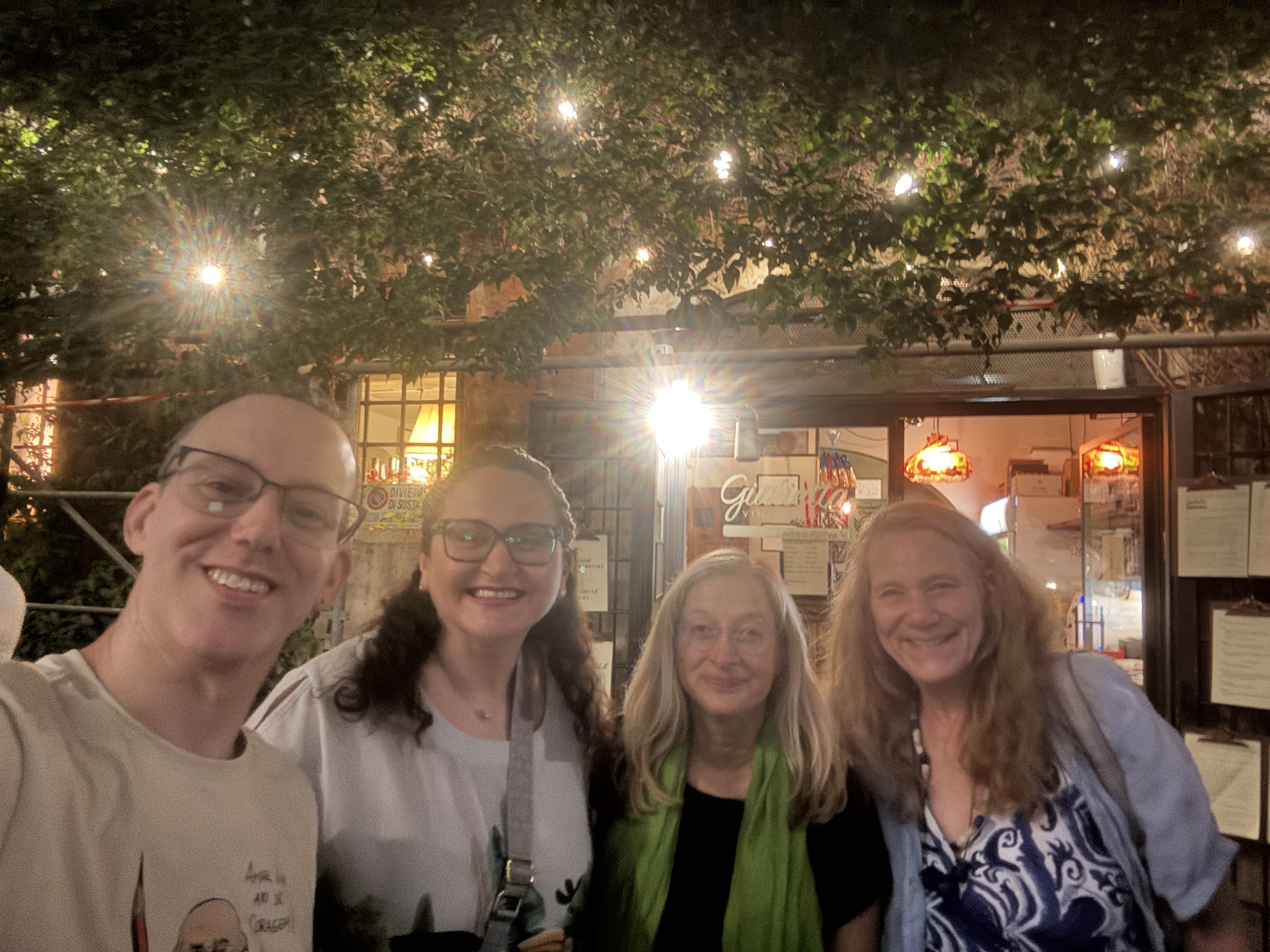 Our trip began on June 4, 2026, with the International Media Literacy Research Symposium in Rome. For the first time, I brought the kids along to a conference, which made the whole experience feel different and a little more chaotic in the best way.
Elizaveta went on the first day and presented her work on rethinking the good guys/bad guys binary. I joined on the second day to give my own presentation, which meant I didn't get to see as many sessions as I would have liked. But what I lost in conference-hopping, I more than made up for in something just as valuable: time with colleagues and friends I don't get to see nearly often enough. Catching up with people whose work I admire, in person, over a conversation, was honestly one of the best parts of the whole trip.
There was something fitting about being in Rome during the Corpus Christi celebrations. The city was alive with processions and tradition layered on top of our academic gathering, and it gave the whole symposium a texture that's hard to describe (faith, history, and scholarship all sharing the same streets).
At the symposium, I presented my work with Lucas Jacob and Michelle Hirschy on "Pause2MAP," making the case for why we need clear social media literacy standards. The kind that can genuinely help students, from elementary through high school, build the skills to navigate the social challenges that come with growing up online. It's work I care deeply about, and presenting it to a room of engaged colleagues was energizing.
From Pompeii to Florence
 After the conference wrapped, we turned into tourists. We wandered the ruins of Pompeii, walked the medieval streets of Siena, took in the Renaissance splendor of Florence, and climbed toward (and around) the famously leaning tower of Pisa.
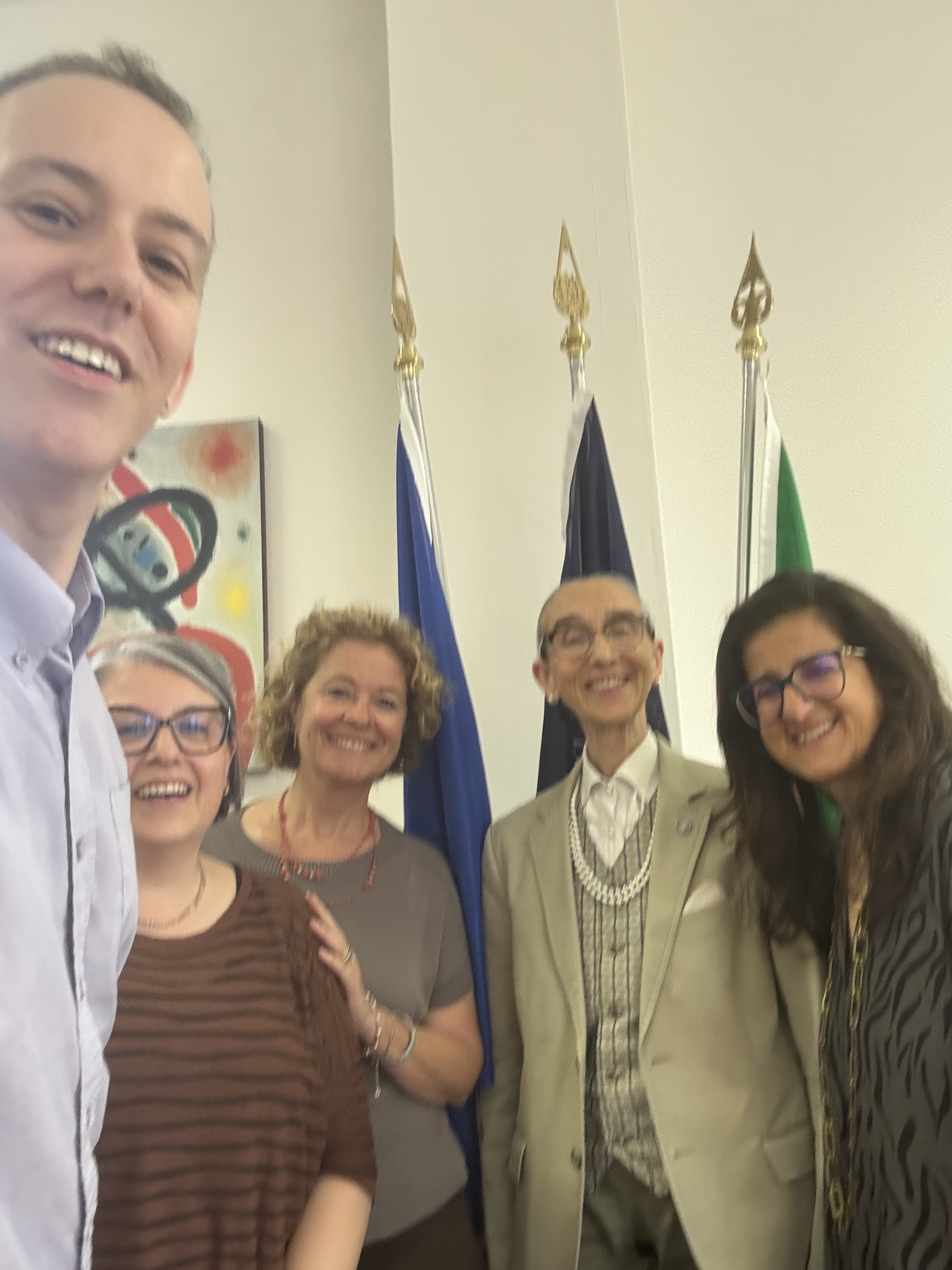
Florence held a special professional moment for me as well. I visited the University of Florence, where my colleague and friend Maria Ranieri works, and she introduced me to the team at LABOA, a laboratory dedicated to open access publishing. This connection is going to be enormously helpful as we continue evolving the Journal of Media Literacy Education (JMLE).
I was honored to be hosted as a guest of Dean Vanna Boffo, who works diligently to support the work of the faculty at the Department of Education, Languages, Intercultural Literature and Psychology, and to meet the heads of LABOA, Francesca Salvadori and Arianna Antonielli. Going forward, the LABOA team will take on the copyediting and design work for forty-five articles published annually in JMLE. Their facilities, and the graduate students working alongside them, are equipped to learn professional academic editing under Francesca and Arianna's supervision. This partnership will meaningfully strengthen the journal's production quality for years to come.
Seeing the Renaissance Through New Eyes
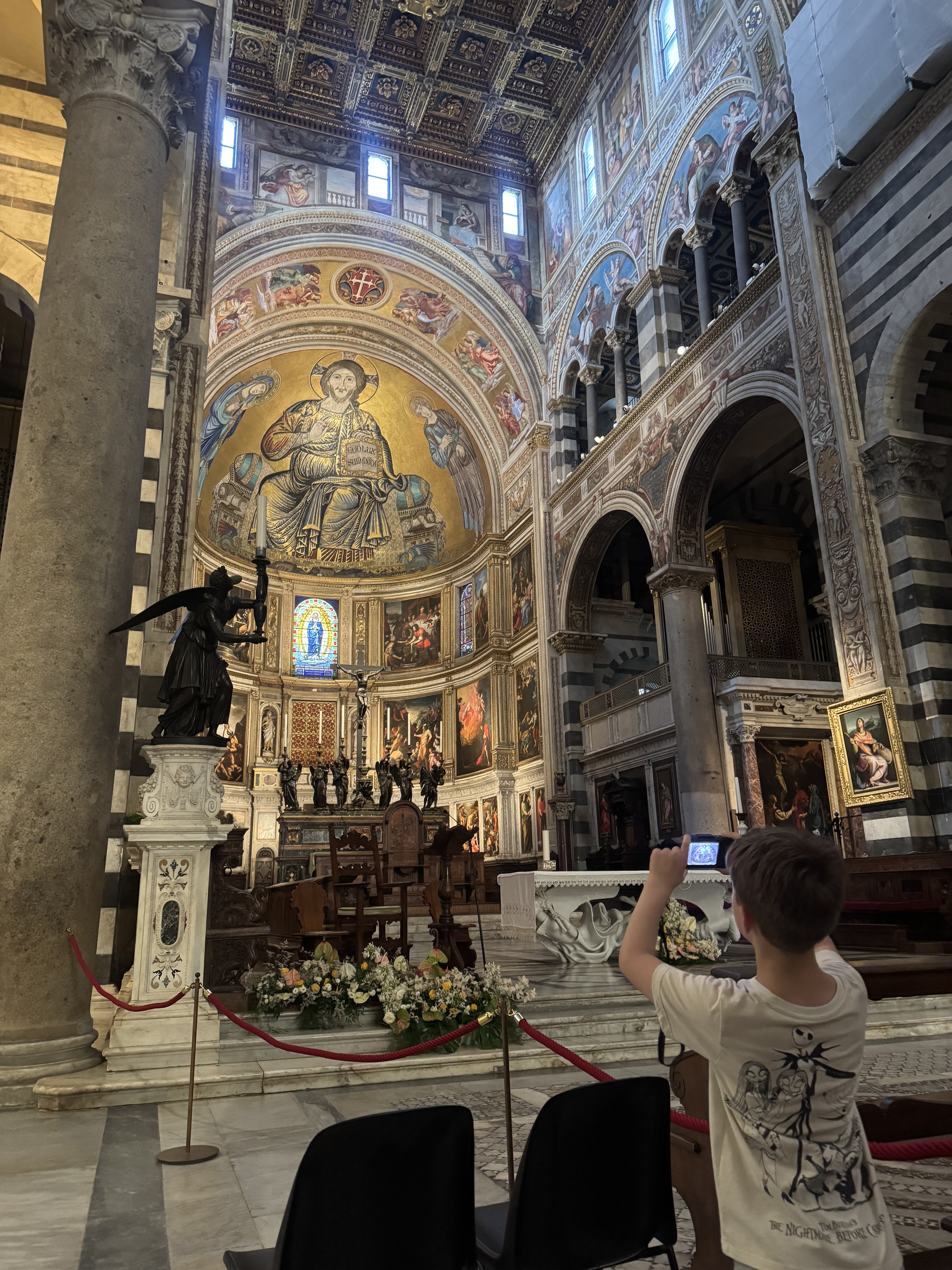 But if I had to choose the most memorable part of these three weeks, it wouldn't be a conference session or a meeting, it would be watching my two kids encounter the Renaissance for the very first time.
Standing in front of Michelangelo's David, I watched their faces shift the way mine must have the first time I saw it. We took in Raphael's artwork, visited the birthplace of Leonardo da Vinci, marveled at Caravaggio, and learned about Galileo Galilei's discoveries. Seeing my children astonished by these works (the same way I was astonished) reminded me why travel like this matters so much.
There's a real difference between reading about the Renaissance, or scrolling through images of it online, and standing in front of these works in their actual scale and presence. No replica on the internet, however high-resolution, can replicate that feeling. Watching my kids experience that gap between the digital and the real, for the first time, might have been the truest lesson in media literacy of the whole trip.
Comments(0)