Reflections for educators and researchers working with autistic middle schoolers and young adults.
I was born and raised in Zimbabwe, and shaped by global experiences. My childhood was defined by the nuances of a family raising a non-verbal autistic child - my brother. I built SPEAK - a System for Pattern-Encoded Augmentative Communication Kinetics - in a context where clinical resources are scarce, where autism is still widely misunderstood, and where the stakes of getting communication intervention wrong are very high. SPEAK is an AI-assisted framework designed to help non-verbal adults with Kanner's autism find their voice, using behavioural pattern recognition, game-based learning, and careful, staged scaffolding.
Growing up alongside him taught me that communication is never just about words; it is about being understood on your own terms.
It is, at its heart, a communication tool. But the deeper I went into its design, the more I found myself thinking about a different problem: what happens when autistic people (across the full spectrum, not just the non-verbal end) encounter the noise, manipulation, and ambiguity of the internet? What does it mean to be digitally literate when your brain processes the world differently? And what can the principles behind SPEAK teach us about how to actually educate for that?
Here is what I learned.
Lesson 1: You Cannot Teach Anyone Anything Until You Know Who They Are
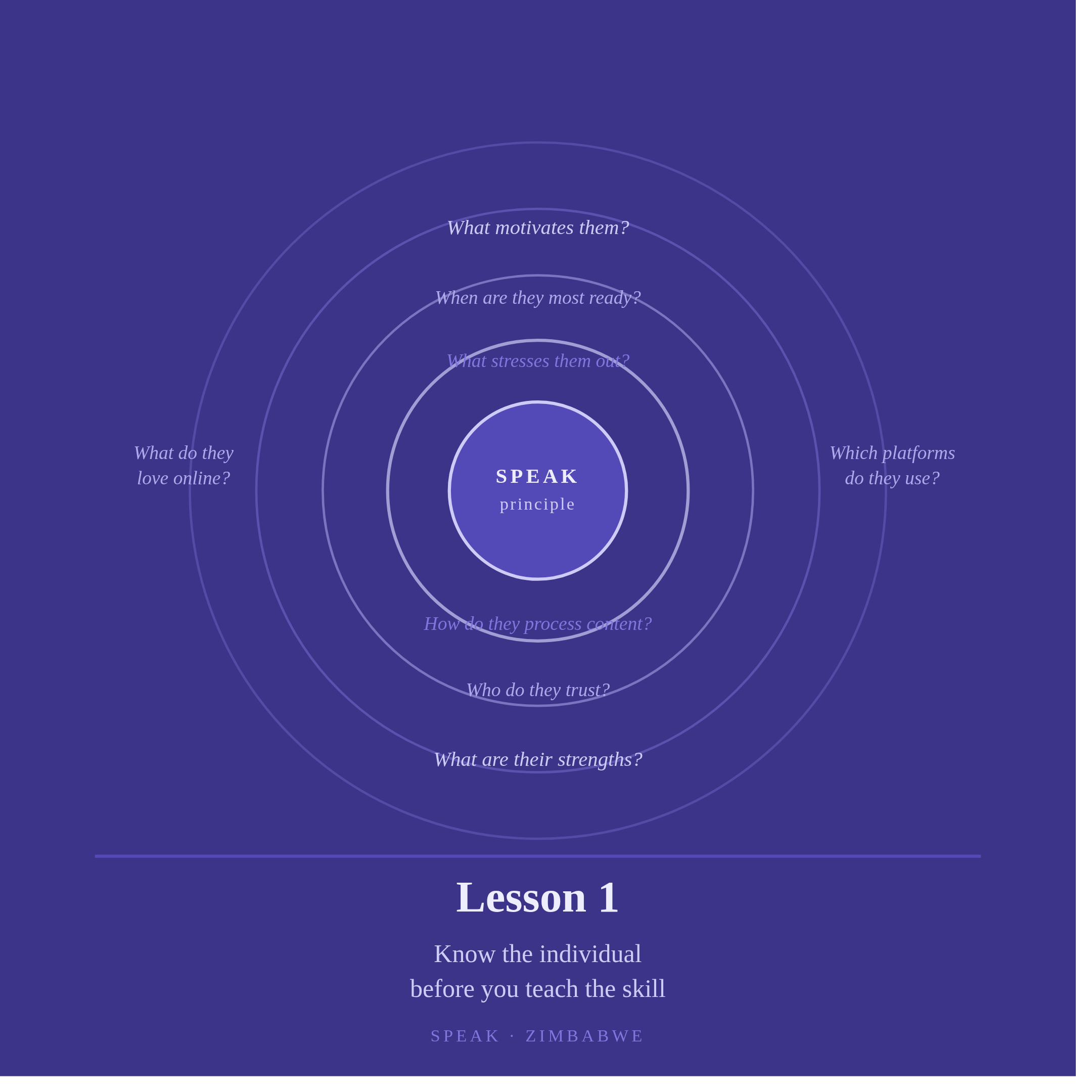
The first and most important design decision in SPEAK was the Behavioural Fingerprint. Before the system does anything - no games, no prompts, no intervention of any kind - it spends 7 to 14 days simply watching and learning. What does this specific person find rewarding? When are they most regulated and ready to engage? What are their early signs of stress? Only after building that individual profile does the system take its first step.
This seems obvious when you say it out loud. But it is the opposite of how most autism interventions are designed, and it is certainly the opposite of how most digital literacy education is delivered.
In schools, digital literacy tends to be taught as a unit. Everyone gets the same lesson about fake news, the same slide about privacy settings, the same worksheet about online safety. The assumption is that the skills are universal and the learner is generic. For autistic students, this fails on multiple levels. Research by Xinru Page at Brigham Young University (2024) found that rules taught in the abstract - don't share personal information, don't talk to strangers - were far less durable than understanding that emerged from navigating real situations on the actual platforms the person already uses. The learner's specific digital life has to be the starting point.
For educators, the implication is not small. It means asking: what platforms does this student actually use? What content do they seek out? What communities do they belong to online? The answers will be different for every person. A 14-year-old who lives on YouTube is not the same as a 22-year-old who uses Facebook to maintain family connections, who is not the same as a non-verbal adult learning to use a communication app for the first time. SPEAK taught me that the fingerprint comes first. In media literacy education, the learner's actual digital world has to come first too.
Lesson 2: The Goal Is Never a "Normal-Looking" Person
SPEAK carries what I call an anti-normalisation principle. It is written into the framework explicitly: the system's goal is never to produce someone who looks or communicates in a neurotypical way. The goal is a person who can ask for what they want, say no to what they don't, and connect with the people they love - on their own terms, in whatever form that takes.
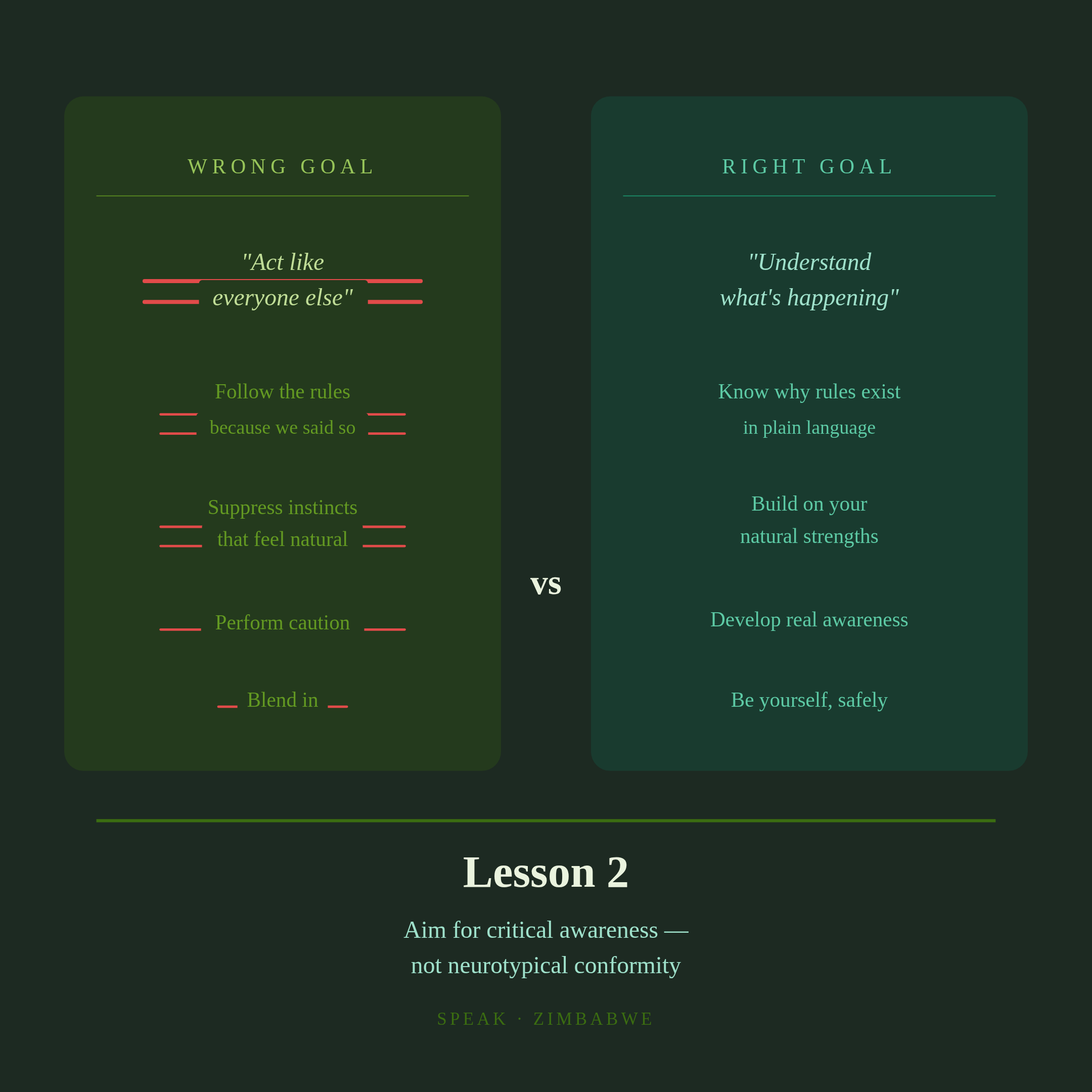 This principle matters enormously for digital literacy education, because so much of how we teach online safety is built on a neurotypical standard of digital behaviour. We teach autistic learners to perform caution, to follow rules, to mimic the instinctive social wariness that most people develop without instruction. But autistic people often experience digital environments in genuinely different ways; with more intensity, more literalness, and more trust.
Research summarised by the Autism Research Institute (Wisniewski, 2024) found that autistic teens and young adults frequently take social media content at face value, sometimes interpret algorithmic suggestions as personal instructions, and can struggle to tell the difference between a Facebook acquaintance and a real friend. Not because they are naïve, but because they read the interface literally. A 2024 study out of Anna University in Chennai, India (Rajagopal & Chandrashekaranof) - one of the few empirical media literacy interventions conducted specifically with autistic young adults in a Global South setting - found that participants made real gains in spotting misinformation and engaging more safely online, but only when the intervention was built around their actual experiences, not around generic "digital citizenship" content.
The lesson here is that we need to stop teaching autistic learners to suppress their natural way of engaging with digital media and start teaching them to understand it. That means being honest: yes, some people online will use your directness against you. Yes, the internet is full of content designed to make you feel things. Here is how to notice that. Not: behave like everyone else behaves. The goal is critical awareness, not conformity.
Lesson 3: Scaffolding Is Not a Shortcut. It Is the Whole Strategy.
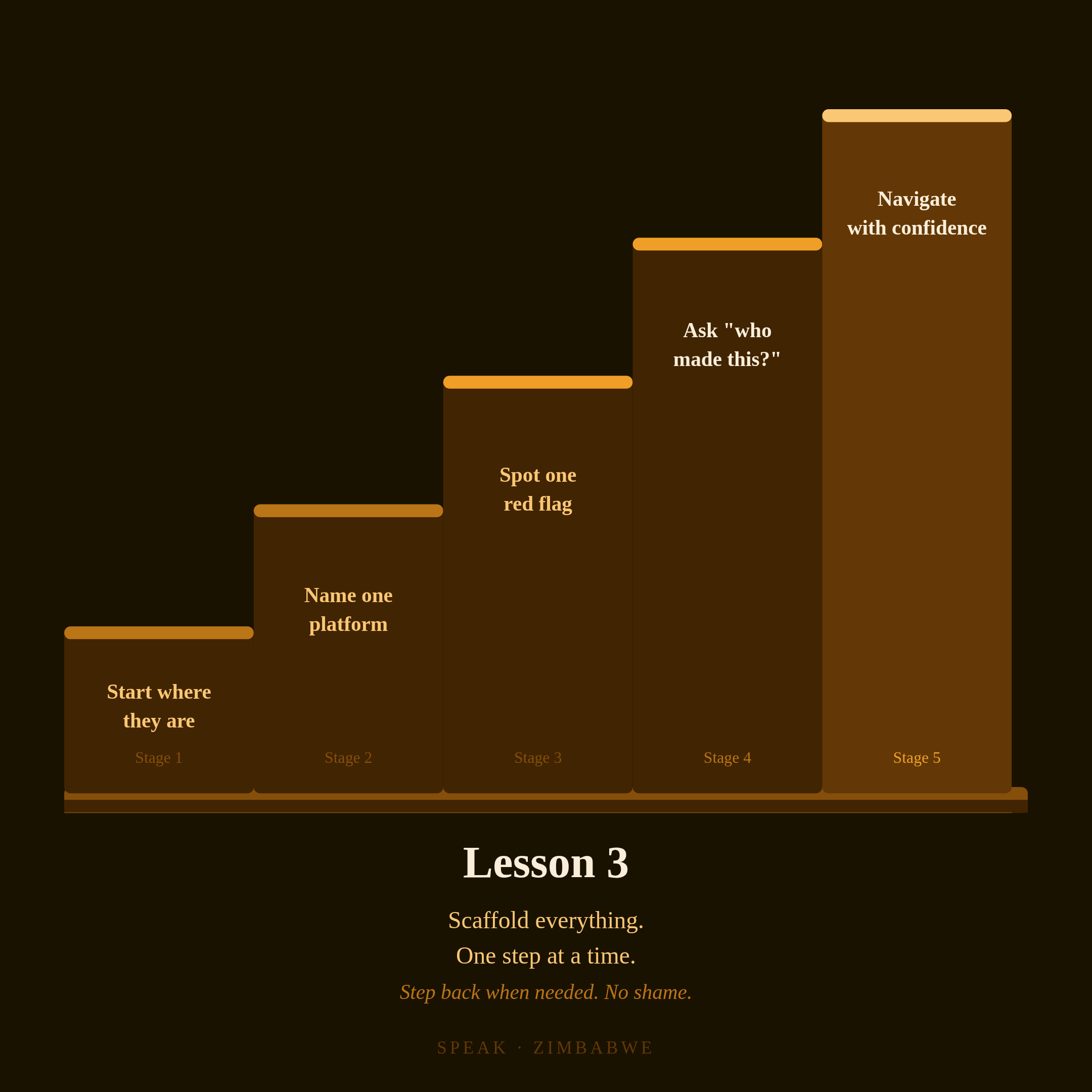
SPEAK does not ask a non-verbal adult to produce a word on day one. It begins with any sound (literally any vocalisation) and reinforces the act of trying. Then it shapes approximations. Then phonemes. Then words. Each stage is only unlocked when the previous one is solid. And crucially: if performance drops, the system steps back. It never abandons someone at a stage they are not ready for.
This graduated approach, what clinicians call shaping, is one of the most well-supported methods in behavioural science (Lovaas, 1987; Sundberg & Partington, 1998). And its absence is, I would argue, the most persistent failure in how we approach digital literacy for autistic learners.
We tend to treat the internet as one thing. But navigating a YouTube recommendation algorithm, evaluating a news article, recognising a predatory message, understanding why an ad is following you around; these are entirely different skills, with different cognitive demands. Throwing all of them at a learner in a semester-long unit is the equivalent of asking a non-verbal adult to produce a full sentence on their first day of therapy.
Xinru Page's social media literacy course (2024), now in its fourth iteration, showed that gamified, repeated practice (broken into discrete, manageable scenarios) worked across a wide range of intellectual ability levels in autistic adults. Practice and repetition were not just helpful. They were the mechanism. This aligns with what SPEAK's game engine does: it maintains learners in what psychologists call the flow corridor; challenge just slightly above what they can already do, with immediate reinforcement when they succeed. Not too easy, not overwhelming. Just right.
For educators, this means building digital literacy curricula that are genuinely staged. Start with what the learner already does online and already understands. Add one layer of complexity at a time. Return to earlier stages when needed without shame. And make the practice feel like something the learner actually wants to do, not a compliance exercise.
A Note on Where This Work Happens
Most research on autism and digital literacy comes from the United States and Europe. But autism does not stop at those borders, and neither does the internet. Researchers writing in the International Journal of Developmental Disabilities (2024) have begun calling for media literacy education to align with the UN's commitment to leaving no one behind - including autistic young people in the Global South. Work in Zimbabwe and South Africa has started to document the particular challenges of digital education in contexts with variable connectivity, multilingual environments, and limited specialist support (Chibuwe & Munoriyarwa, 2023).
SPEAK is being developed locally precisely because the need is real and the tools available are not built for this context. The same is true of digital literacy education. The frameworks being exported southward were not designed for our classrooms, our bandwidth constraints, or our learners. Building them from the ground up - fingerprint first, anti-normalisation always, scaffolded at every stage - is not just better practice. It is more honest about who we are actually trying to serve.
In Summary
SPEAK taught me three things that I believe belong at the centre of any serious approach to media and digital literacy education for autistic learners:
Know the individual before you teach the skill. The learner's actual digital life is the only legitimate starting point.
Aim for critical awareness, not neurotypical conformity. The goal is not a person who behaves online the way everyone else does. It is a person who understands what is happening to them, and can act on that understanding.
Scaffold everything. Break the skills down. Practice them. Come back to them. Make the learning feel like something worth doing.
None of this is radical. But it requires educators to slow down and treat digital literacy the same way good autism intervention has always treated communication: as something deeply personal, carefully staged, and built on trust.
Key References
- Rajagopal, T., & Chandrashekaranof, V. (2024). "Leaving no one behind": Digital empathy and inclusive media literacy education for young adults on the autism spectrum. International Journal of Developmental Disabilities, 71(1), 190–202.
- Wisniewski, P. (2024). Social media use and autism: Teens and adults. Autism Research Institute Webinar Series. https://autism.org/social-media-use-and-autism-teens-and-adults/
- Page, X. (2024). The benefits and challenges of using social media: Reducing risks through joint problem-solving and digital literacy. Autism Research Institute. https://autism.org/social-media-and-neurodiversity/
- Chibuwe, A., & Munoriyarwa, A. (2023). Emerging methods and challenges in teaching media studies during COVID-19 in Zimbabwe and South Africa. SAGE Open, 13(2). https://doi.org/10.1177/21582440231167113
- Lovaas, O. I. (1987). Behavioural treatment and normal educational and intellectual functioning in young autistic children. Journal of Consulting and Clinical Psychology, 55(1), 3–9.
- Sundberg, M. L., & Partington, J. W. (1998). Teaching Language to Children with Autism or Other Developmental Disabilities. Behaviour Analysts Inc.
Comments(0)