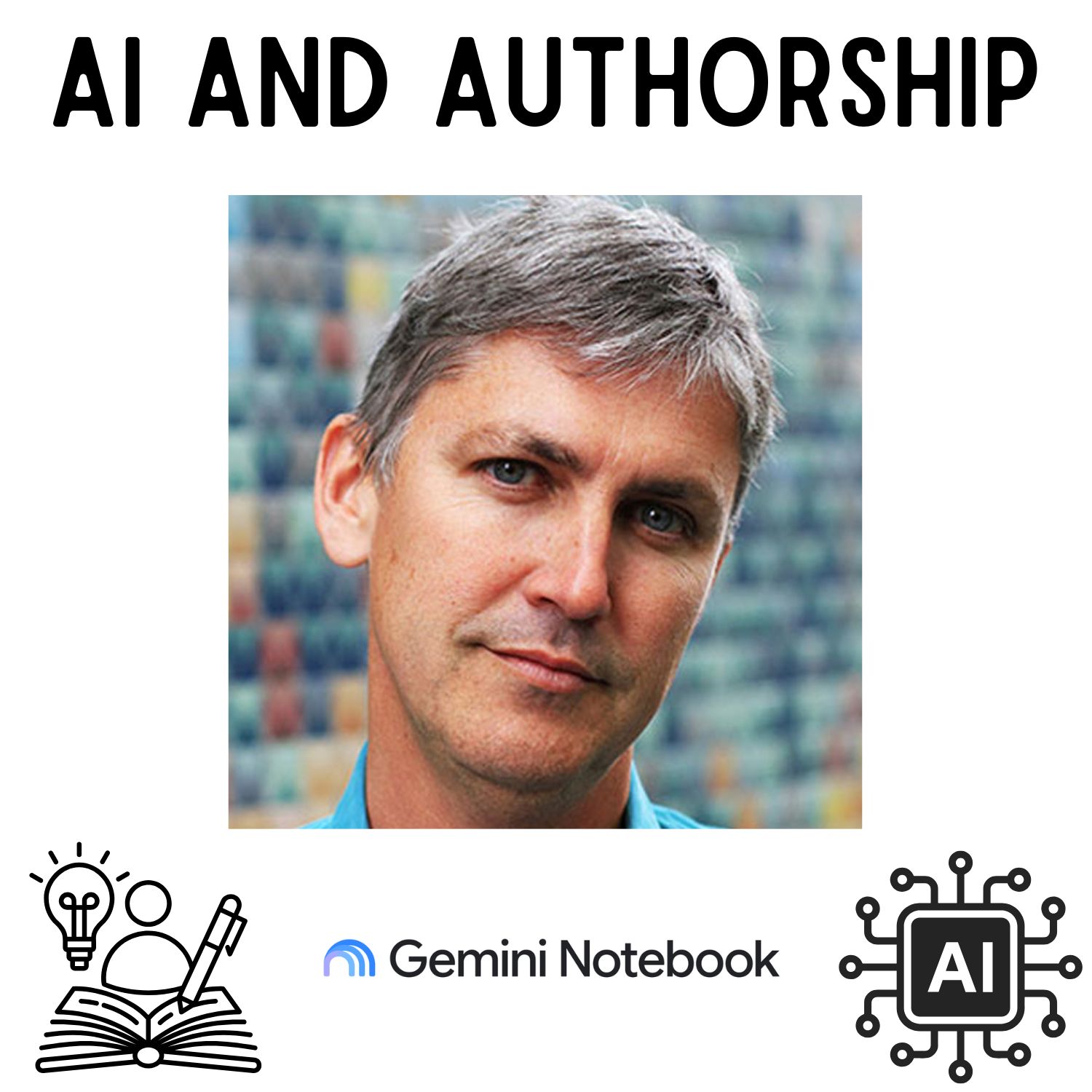
 Where is the line between acceptable and unacceptable AI use? For some people, any use of AI is both unacceptable and unethical. These folks could be considered “conscientious objectors of artificial intelligence.” Whether it’s the impact of data centers on our communities and environment, the influence of wealthy, BigTech oligarchs on our democracy and civic culture, or the trauma inflicted upon workers paid menial wages to help train AI data models, there are many reasons to reject AI use altogether as unethical. However, millions of people (including many students and teachers) DO choose to use AI today. As 2026 teachers and educators, we each wrestle with the question of how AI use could be ethical. Many educators agree it is OK to spellcheck. Or for writers to check grammar with algorithmic assistance. (I.e. with a tool like Grammarly.) All professional publishing houses employ editors, who make (at least some) changes to the books of their authors. But how about letting an AI chatbot write an entire essay for a student who submits that product as their own work for an academic grade? What about letting AI autonomously write an entire book or novel, even if it is a bespoke model trained extensively on the human writing of a particular person? Many would argue these are unethical AI uses. These are important and challenging questions which we need to grapple with when it comes to writing and authorship.
In this challenging and enlightening conversation recorded over video, author Stephen P. Johnson and journalist Nicholas Thompson discuss these questions and others, regarding the continuum of AI writing ethics. Stephen Johnson is the cofounder of “Google‘s Gemini Notebook,” formally “Notebook LM,” and is uniquely qualified to shed light on these challenging questions. Join us for a Zoom webinar conversation about AI usage, writing, authorship, authenticity, ethics, and more.
Note: Because of the Labor Day holiday weekend in the United States, this monthly MediaEd Club Zoom meet up is rescheduled for the evening of the second Monday in September. (Sept 14, 2026 at 7 pm ET.)
AI Attribution: iOS spellcheck within the iOS Notes app was the ONLY algorithmic tool I used to help me write this webinar description. I created the thumbnail for this webinar “by hand” (without algorithmic assistance) using Canva.com. I used Claude.ai to help select included "Optional Media" links.
Date: Monday, September 14, 2026 (Sept 15 for CET and IST)
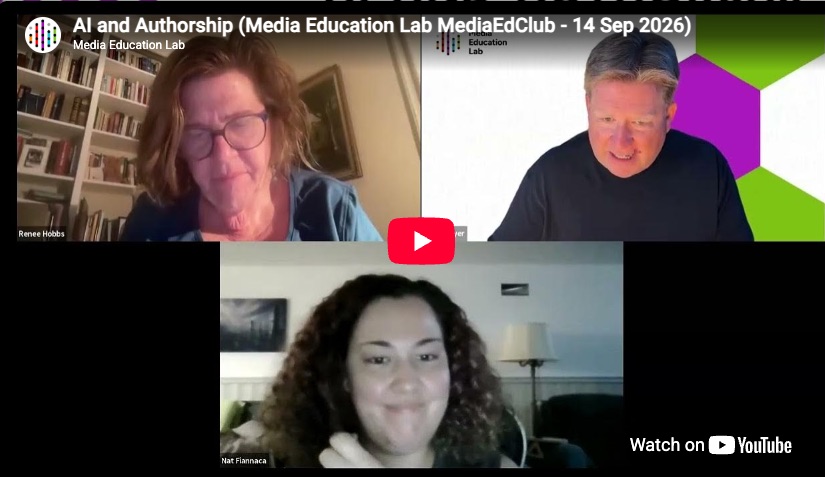
SIGN UP here to receive our newsletter with updates and details on media club, webinar series, and teaching resources.
Recommended Media (please preview before attending)
- Video: Steven Johnson on How AI Will Change Writing (60 min, Nicholas Thompson and Atlantic re:think, 12 August 2026)
Optional Media (enrich your learning)
- Article: Notebooks And The Extended Mind (Steven P Johnson, 16 July 2026)
- Gemini Notebook (formerly Notebook LM)
- Article: "A writer is suing Grammarly for turning her and other authors into 'AI editors' without consent" (Amanda Silberling, TechCrunch, 12 Mar 2026).
- Article: "Why I'm Suing Grammarly" (Julia Angwin, The New York Times, 13 Mar 2026)
- Article: "Thousands of AI-written, edited or 'polished' books are being sold, an eerie echo of Orwell's 'novel-writing machines'" (The Conversation, 15 Apr 2026)
- Article: "Claude Vs. Pangram: The Watermark Wars Are On!" (Steve Rosenbaum, MediaPost, 17 Aug 2026)
- Article: "AI ghostwriters are an ethical challenge for higher education. Here's how universities can adapt" (Scroll.in, 13 Apr 2026)
- Study: "Student Perceptions of AI-Assisted Writing and Academic Integrity" (Preprints.org, 23 Jul 2025, n=401 students)
- Article: "AI Data Centers: Big Tech's Impact on Electric Bills, Water, and More" (Consumer Reports, 20 Mar 2026)
- Podcast: "The Future of Writing: A Conversation with Ethan Mollick and Steven Johnson" (55 min, The Next Big Idea, Rufus Griscom, Aug 2025)
- Substack of Steven P. Johnson: Adjacent Possible
Host: Dr. Wesley Fryer
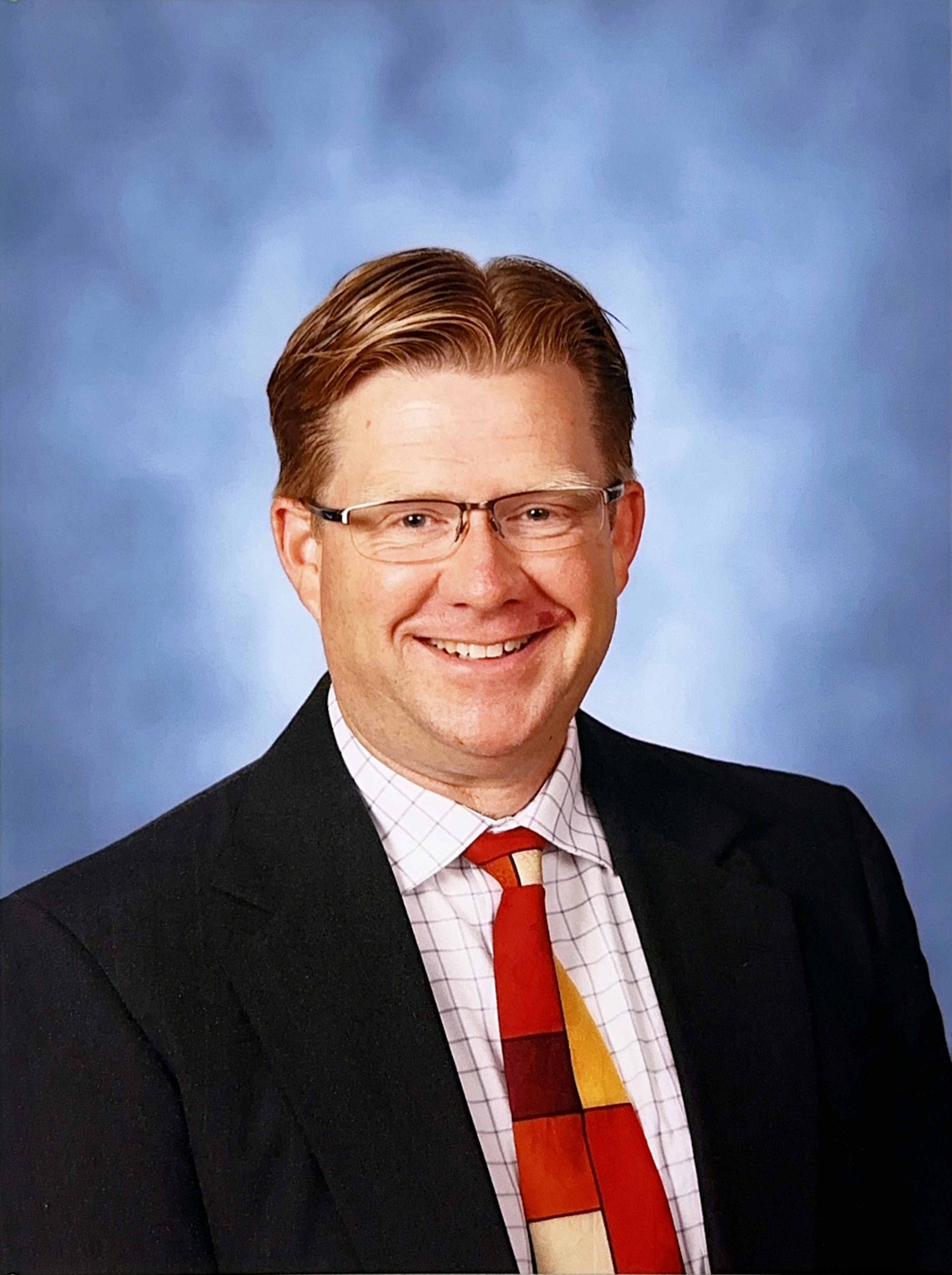 Wesley Fryer, PhD, is a middle school STEM and media literacy middle school teacher at Providence Day School in Charlotte, North Carolina. As an educational technology “early adopter / innovator” since the late 1990s, Wes continues to share regularly on social media. Learn more on wesfryer.com.
Please get in touch with us if you want to suggest future Media Club meeting topics to discuss an article, book, podcast, video or any media related to our interests.
Dr. Wes Fryer, Webinar Series Manager | wes.fryer@providenceday.org
* AI Image (for this webinar) generated by Wes Fryer using Gemini's Nano Banana Pro.