Case Study | MediaEd Insights | Digital Ubuntu Edition | July 2026
Written by Tsitsi M Mutendi
Protecting Hunhu/Ubuntu in the Age of AI
 Artificial Intelligence is no longer knocking at the classroom door; it has already walked in.
Across the world, schools are racing to integrate AI tutors, adaptive learning platforms, coding programmes, robotics laboratories, virtual reality experiences and automated assessments. Governments are rewriting curricula. Parents worry that if their children are not learning AI today, they will be left behind tomorrow.
The urgency is understandable. Today's children will inherit a world where algorithms influence decisions, machines perform routine work, and digital fluency is as fundamental as literacy once was.
Yet amid this technological acceleration, perhaps the most important educational question is not how quickly children can learn AI. It is something far deeper: can we prepare children for the future without sacrificing what makes them profoundly human?
For Africa, this question carries particular significance. We do not simply educate children to become workers; we educate them to become people. That distinction matters, because while technology continues to evolve at breathtaking speed, the developmental needs of a child have not changed. Children still need relationships before information, purpose before productivity, wisdom before knowledge, and belonging before achievement.
This is where Hunhu/Ubuntu and Montessori offer an alternative vision, not as resistance to technology, but as a compass for navigating it.
The Cost of Constant Speed
Modern education increasingly mirrors the digital economy. Everything is measured, accelerated and optimised. Students move rapidly from one lesson to another, notifications interrupt concentration, performance dashboards quantify progress, and AI promises instant answers. The expectation becomes that learning should be immediate, personalised and efficient.
Efficiency, however, is not the same as education. Human development has never followed the logic of algorithms. A child does not develop empathy faster because information arrives instantly. Character cannot be downloaded. Curiosity cannot be automated. Wisdom cannot be generated with a prompt.
Maria Montessori understood this over a century ago. One of the defining characteristics of Montessori education is the uninterrupted work cycle, a protected period where children choose meaningful work, concentrate deeply, solve problems independently and move at their own developmental rhythm. There are no artificial interruptions, no constant switching, no pressure to keep pace with everyone else. The child is trusted.
This seemingly simple practice develops something increasingly rare in today's world: sustained attention. Ironically, as artificial intelligence becomes more powerful, the uniquely human capacity for deep thinking becomes even more valuable.
Hunhu/Ubuntu: Education Beyond Achievement
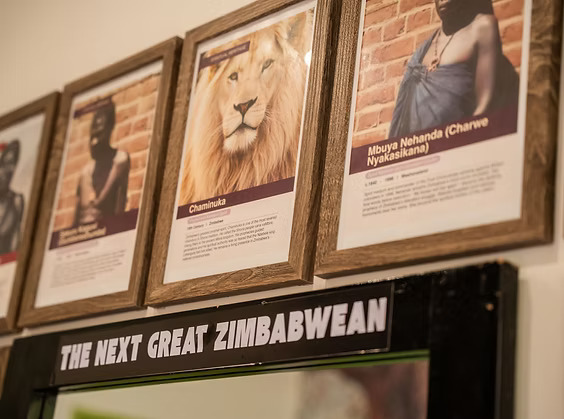
African philosophy has always viewed education differently. Hunhu/Ubuntu reminds us, “I am because we are.” Knowledge has never been separated from relationships. Success has never been divorced from responsibility. Learning has never been an individual pursuit alone. The goal is not merely to produce intelligent individuals but ethical citizens who strengthen families, communities and society.
This philosophy challenges one of technology's greatest temptations: individualisation without connection. AI can personalise learning pathways, recommend exercises and adapt assessments, but it cannot replace the moral formation that happens when children negotiate conflict, care for younger peers, serve their communities or learn accountability within real relationships.
Children learn compassion from compassionate adults. They learn integrity by observing integrity. They learn Ubuntu by living it. Technology can support these experiences; it cannot substitute them.
Technology Must Remain a Tool, Never the Teacher
This distinction shapes our philosophy at Mutendi Montessori Day School. Our educational foundation remains unequivocally Montessori. Technology is welcomed, but never worshipped. Children explore coding because it develops logical thinking. They build robots because engineering encourages creativity and problem solving. They investigate artificial intelligence because understanding emerging technologies prepares them for tomorrow's economy.
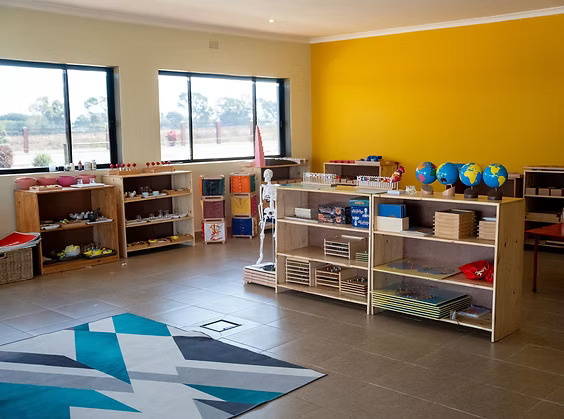
But technology never becomes the centre of learning. The child remains the centre. The prepared environment remains the teacher. Hands still manipulate concrete materials before abstract concepts. Children still garden. They still create with their hands, collaborate, spend time outdoors and develop independence through purposeful work. Technology enters only when it enriches these experiences rather than replacing them.
This distinction is subtle but profound. Many educational systems ask, “How can education fit technology?” We ask, “How can technology serve child development?” The difference changes everything.
Digital Fluency Must Include Digital Humanity
Preparing children for an AI powered future requires more than technical competence. We must also prepare them to be responsible digital citizens, and Hunhu/Ubuntu offers an extraordinary framework for this challenge.
Before children learn to code machines, they should learn how their words affect people. Before they build digital communities, they should understand real community. Before they master online communication, they should practise respectful dialogue face to face.
Ubuntu asks different questions from those typically found in technology education. Instead of “Can I post this?” Ubuntu asks, “Should I?” Instead of “Will this go viral?” Ubuntu asks, “Will this build or break someone?” Instead of “Can AI do this?” Ubuntu asks, “Should humans delegate this?”
These questions cultivate discernment rather than dependence. As AI becomes capable of generating essays, artwork, code and conversations, children will increasingly need ethical judgement to decide when technology enhances human creativity and when it diminishes it. The future belongs not only to those who understand machines, but to those who understand humanity.
The Chiratidzo Model: Heritage and Innovation Together

The Chiratidzo educational philosophy was never designed to choose between African heritage and global innovation. Its purpose is to integrate both. Children are grounded in identity before engaging with complexity; they understand who they are before being asked what they want to become. African languages, culture, history and values coexist alongside science, entrepreneurship, robotics and emerging technologies.
This is not contradiction. It is integration. Children who know where they come from are often better equipped to navigate where the world is going. Innovation without identity creates imitation. Identity without innovation creates stagnation. Education must cultivate both roots and wings.
At Mutendi Montessori and within the broader Chiratidzo model, technology therefore becomes an extension of human purpose, not a replacement for it. Children are encouraged to ask not only how something works but why it matters. They are invited to solve local problems with global tools, and they learn that innovation is most meaningful when it serves people. This is Ubuntu in practice.
The Skills AI Cannot Replace
Much has been written about the jobs artificial intelligence may eliminate. Far less attention is given to the human qualities that will become increasingly valuable: empathy, moral courage, creativity, adaptability, collaboration, cultural intelligence, leadership, wisdom, presence and compassion.
These are not secondary skills. They are becoming competitive advantages. Ironically, the more intelligent machines become, the more valuable deeply human capabilities become. Employers increasingly seek people who can solve complex problems collaboratively, communicate across cultures, lead ethically and think creatively in uncertain environments.
Hunhu/Ubuntu has been developing precisely these capacities for generations. Perhaps what the world calls “future skills” are, in many respects, ancient African strengths.
Protecting the Unhurried Child
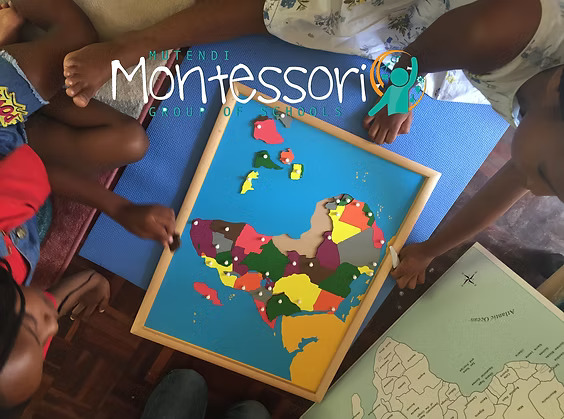
The greatest danger facing education today is not artificial intelligence itself. It is allowing technological possibility to dictate educational purpose. Children are not products to be optimised; they are human beings becoming themselves. They deserve uninterrupted time to wonder, to build, to fail, to imagine, to observe, to reflect, to care and to belong.
The unhurried child is not falling behind. The unhurried child is developing the depth that speed often destroys.
As educators and parents, we must resist the assumption that every innovation deserves immediate adoption, not because technology is dangerous, but because childhood is precious. Every educational decision should begin with one question: does this serve the whole child? If the answer is yes, embrace it. If the answer is no, have the courage to wait.
Our Greatest Innovation May Be Our Humanity
Artificial intelligence will continue to transform education. That transformation is inevitable. But losing our humanity is not.
Africa has something profoundly important to contribute to the global conversation about education, not because we have the newest technology, but because we possess enduring philosophies about what it means to become fully human. Hunhu/Ubuntu reminds us that intelligence without compassion is incomplete. Montessori reminds us that learning cannot be rushed. Together they challenge the assumption that faster always means better.
The future does not need children who simply know how to use AI. It needs children who know when to use it, why to use it and, most importantly, when human presence matters more than machine efficiency.
In an age obsessed with acceleration, protecting the unhurried child may become one of the most radical educational acts of all, because the children who will shape tomorrow's world are unlikely to be those who merely kept pace with technology. They will be those who never lost sight of their humanity.
 Tsitsi M Mutendi is a continental and global family business advisor, speaker, and author, and founder of interconnected ventures including Nhaka Legacy Planning and African Family Firms.
She leads Chiratidzo Education Group, a growing continental education operator whose flagship, Mutendi Montessori Day School, blends Montessori pedagogy with the values of Hunhu/Ubuntu.
She is the author of Raising the Baobab and host of the Enterprising Families Podcast.
MediaEd Insights - June 2026 - AI: Educator Perspectives
Opening Essay: Digital Ubuntu: African Philosophy, AI, and the Future of How We Learn by Aurra Kawanzaruwa
Case Study: The Unhurried Child in a High Speed World by Tsitsi M Mutendi
Curriculum Review: The Katunga WATOTO Framework by Caroline Makumbe
Research Synthesis: The Ubuntu Operating System by Jennifer Kaberi
Comments(0)