Research Brief | MediaEd Insights | Back to School: Reflections on Teacher Education Edition | September 2026
Hosted by the Media Education Lab and Media Literacy Now
.jpg)
As educators, we’re expected to make sure our students can read a text, find information, and write an essay, but our students live in a world where that’s not enough. They also have to figure out what to believe, whose perspective they're hearing, what influences their decisions, and how they can be mindful in their consumption and creation of media. Those abilities sit at the heart of media literacy, which many experts consider central to what it means to be literate in the 21st century.
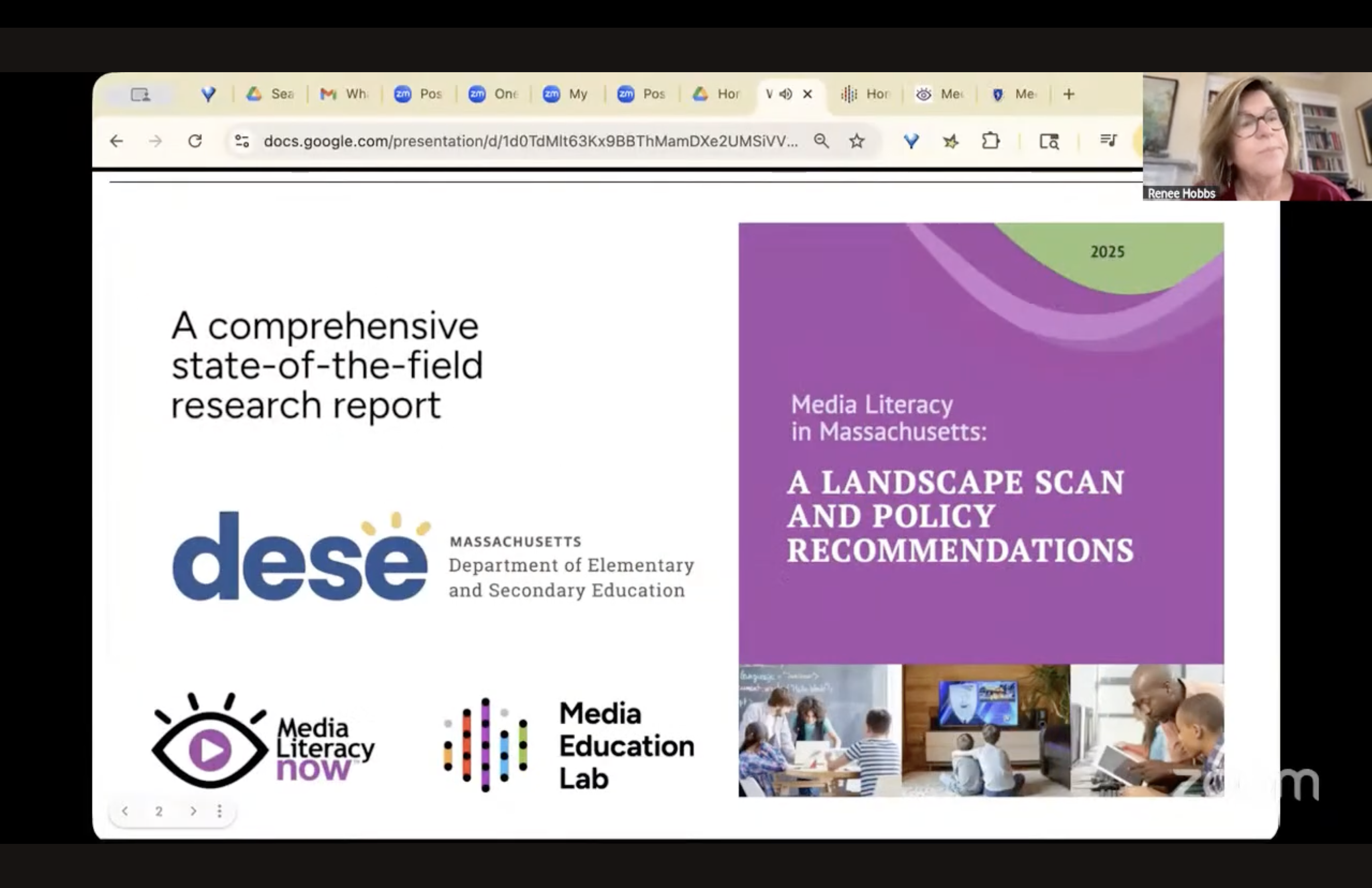
In Massachusetts, educators, librarians, and state and district leaders are asking what it will take to make those skills a meaningful part of every student's education. The new Media Literacy Landscape Scan, published by the Media Education Lab in partnership with Media Literacy Now and the Massachusetts Department of Elementary and Secondary Education (DESE), offers an important look at where that work stands.
To launch the Landscape Scan, we brought together people working across Massachusetts schools and communities for a conversation about what media literacy looks like on the ground and where it might go next.
Media literacy: a high-stakes need
Cambridge Public Schools Superintendent David Murphy offers one way of thinking about the stakes. He describes media literacy as a bridge between the content students encounter in school and their capacity to actually use that knowledge. Students need the tools for making sense of the information environment in which those facts and concepts live.
As Beth Williams-Breault points out during the webinar, Massachusetts standards that address decision-making, analyzing influences, and information and resource seeking are already asking students to practice skills that are fundamental to media literacy.
The challenge is making these existing calls for media literacy intentionally prioritized, rather than something that happens only when an individual educator takes it on.
Diverse approaches and wide reach
Renee Hobbs brings up that both a strength and challenge of media literacy as a framework of instruction is that there isn't one single way into the work.
Educators encounter the need for and the opportunity to introduce media literacy skills through their work in literacy, libraries, health education, social studies, technology, or civic learning. Katherine Tarca, from DESE's Literacy and Humanities team, talks about media literacy as a key piece of the larger puzzle: bringing literacy education into the digital age.
Kyra Brissette of Media Literacy Now points to progress with standards and the importance of collaboration across subject areas. This interdisciplinary quality of media literacy means that it can become part of the fabric of a school rather than being confined to a single class, but it also often means that educators are doing related work without necessarily sharing a common language, framework, or vision. The goal of a report like this, followed up by action from DESE, is to build greater coherence without losing this diversity of approach that makes media literacy so dynamic.
Media literacy as a community effort
Another outcome of the landscape report is solidly establishing the need for media literacy education early in a student’s education. Jess Garbowski, an educator from Easton, reminds us that elementary students are already ready for these conversations because they are already living in a media-saturated world. They are ready, and perhaps eager, for the vocabulary and tools for understanding what they already encounter.
The report also highlights the important role of school librarians, several of whom we heard from in the webinar. Sarah Novogrodsky, Director of Library Media Services for Cambridge Public Schools, describes librarians as leaders in media literacy and talks about the work as a survival skill.
Jean LaBelle-Pierce, a librarian in Maynard Public Schools, shares a story about Gracie Gilligan’s senior project, which helped get a larger effort moving in her community.
These stories are a useful reminder that educational change requires collaboration. Attention and investment from DESE and school districts that support work like this landscape report are incredibly important, but so are the students, educators, and librarians that get the ball rolling by taking direct action.
We invite you to watch the full conversation and hear from the educators, librarians, and state and district leaders who are helping imagine what media literacy education can and needs to become.
MediaEd Insights | Back to School: Reflections on Teacher Education Edition | September 2026
Opening Essay: Courage Is Learned Together: Why Professional Development Is the Heart of Media Literacy Education by Yonty Friesem
Review: Collaborative, Responsive, and Future-Focused: Reflections on the Media Literacy Institute by Michele Johnsen, Monika Hanley, and Catherine Morris
Case Study: By Students, For Students: Building Community at the MediaEd Graduate Symposium by Allie Thrall and Salome Apkhazishvili
Research Brief: What's Going on with Media Literacy in Massachusetts: A Landscape Scan by Media Literacy Now and the Media Education Lab
Comments(0)