Research Synthesis | MediaEd Insights | Digital Ubuntu Edition | July 2026
Written by Jennifer Kaberi
 My son is going through a rite of passage. Not ancient, not distant. It is happening now, this season, with the men of his family preparing him quietly for what he is leaving behind and what he is walking toward. His age-mates, boys born in the same season, are moving through it with him. In a few weeks he will leave home, enter a space held by elders, and be taught things I cannot teach him. Then he will return, and he will not be the same. The community will gather to witness what he has become.
I have been thinking about this as governments across the world reach for the same lever in response to children's digital harm: raise the age limit, lock the door, keep them out.
I understand the instinct. The harms are real, and in some cases catastrophic. But I am against the ban, and watching my son has clarified why.
Banning is not a threshold. It is a wall. And children do not grow through walls. They grow through thresholds: prepared for, witnessed, crossed alongside others.
The digital world is not going away. Children are not waiting outside it, holding their breath until some magic birthday grants them entry. They are inside it now, growing up in an environment nobody designed for growing up. The question was never whether children belong online. The question is whether we are willing to build digital spaces that reflect how children actually become themselves.
On that question, Africa answered a very long time ago.
THE WEB, NOT THE NODE
When a mother gave birth in the communities I come from, the village moved in. She did not parent alone. An auntie took the baby, a grandmother cooked, older children ran errands, someone made sure she slept. Care was distributed. Protection was not a setting you toggled. It was a culture you lived inside.
Children learned by participating, not by preparing. If water needed fetching, everyone went, including the smallest, so they would learn the way. If your clan were medicine people, you learned which plants to pick and how to read a fever. Formation happened in the doing.
The relationships were differentiated by design. Girls went to their aunties, not always their mothers, because there are things you can tell an auntie that you cannot tell the woman who raised you. Boys went to their uncles. Each adult held a different piece of the child's becoming. Beneath all of it sat the age group: the people born in your season, who moved through every stage of life beside you.
The safety circle was never one person. It was a web.
The Cameroonian psychologist A. Bame Nsamenang gave this a name: social ontogenesis. The child does not develop toward community. The child develops within it, through it, as a contributing member from the earliest possible age. He called the developmental goal responsible intelligence: not academic IQ, not self-regulation, but the capacity to understand your obligations to others and act inside a living web of relationships. John Mbiti named the philosophy underneath it. I am because we are.
Now consider what every platform serving children assumes instead: that a child is a node. A solitary account. A lone user. One child. One dashboard. One parent, exhausted, expected to do what a village once did.
We kept the node. We threw away the web.
THE THREE PHASES WE NEVER BUILT
The anthropologist Arnold van Gennep identified three phases in every rite of passage he studied: separation, liminality, reincorporation. Each one does specific developmental work. Each one is missing from digital childhood entirely.
Separation is the community's formal declaration that something has ended. It is not abandonment. It is honour. It says: what you were is worth marking, and what you are becoming is worth taking seriously. There is preparation. Elders speak. The old identity is set down with care. A child receiving a first smartphone leaves nothing behind. Nobody names what is beginning. We hand them access as though access were the same thing as readiness.
Liminality is the in-between, the threshold space itself. Uncomfortable by design, because transformation requires friction. But held. Structured. Protected by elders and shared with peers who are crossing at the same time. My son will not go through that space alone. His age-mates will be there, holding him as he holds them. Digital adolescence has not lost the liminal space. It has simply left it unstructured and unwitnessed. Children encounter harassment, confusion, desire and shame in the in-between, with no elder holding the perimeter and no cohort designed to move through it together. The threshold exists. Nobody is guarding it.
Reincorporation is the return, made real by being seen. The community gathers. New rights are conferred. Crucially, new obligations are named in the same breath, because the deepest lesson of the rite is that freedom and accountability arrive together, inseparable. Digital childhood has no reincorporation at all. A platform unlocks on a birthday. No community gathers. Nobody says out loud: you have come through something, we have seen you, here is what we now expect of you.
We have made digital citizenship invisible. And invisible citizenship produces invisible accountability.
THE HONEST RECKONING
I want to be clear about the limits of this argument. Traditional practice was not uniformly good. Some initiation rites caused real harm, and some deserve to stay firmly in the past. But it would be a serious error to discard the architecture because some of the content was harmful.
Communal witnessing, graduated responsibility, peer cohorts, elder guidance through vulnerable transitions: that structure is developmentally sound. Africa has been evolving its own systems for generations. The African Union became the first region in the world to adopt a continental child online safety and empowerment policy. We know how to keep the frame and rebuild what sits inside it.
WHAT I WOULD BUILD INSTEAD OF A BAN
Here is what I am calling for. Concrete design direction, drawn from what African communities already proved works.
→ Preparation before access - guided, shared, not solitary.
No child enters a new digital space without a genuine readiness period: what this space is, what the rights are, what the responsibilities are. Undergone with the child's peer cohort. the age-mates moving through the same digital transition at the same time. The separation phase, designed in.
→ A protected liminal space before full exposure.
Graduated access. Partial participation before full platform exposure. A designed in-between where children learn, make mistakes, ask questions, and are supported, held by mentors, navigated with peers, before the full weight of the platform architecture lands on them. The liminality phase, designed in.
→ Public reincorporation, digital responsibility earned and witnessed.
Digital citizenship conferred as an achievement, marked by community, celebrated, named. The moment a child moves into fuller digital participation recognised by their family, their peer cohort, their school, their community. Not silently defaulted on a birthday. Witnessed. The reincorporation phase, designed in.
→ Elders as presence, not just parental control dashboards.
Teachers, faith leaders, community mentors, older siblings, each with a designed role in the child's digital life, each holding a different piece of the child's becoming. Accompaniment, not surveillance.
→ Age-mates as the primary safety architecture.
Children moving through digital life together, accountable to each other, holding each other, the way age-mates once held each other through initiation.
The proof of concept is us.
We do not need to remove children from the digital world. We need to build the threshold we never built, and then walk them across it, together.
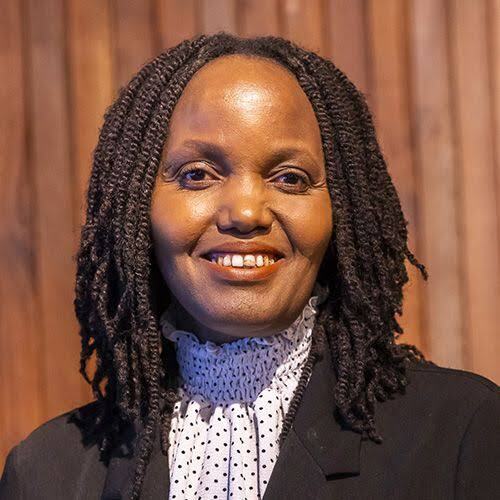
Jennifer Kaberi is the Founder and CEO of Mtoto News International, a pan-African children's media and civic participation network, a Research Alum at Harvard's Berkman Klein Center for Internet and Society.
Jennifer is also a published author of the Gear Model of Child Participation, and two research papers focusing on Children’s Experiences with Generative AI in Kenya, and Tech-Facilitated Gender-Based Violence on Children and Adolescents in Kenya.
MediaEd Insights - June 2026 - AI: Educator Perspectives
Opening Essay: Digital Ubuntu: African Philosophy, AI, and the Future of How We Learn by Aurra Kawanzaruwa
Case Study: The Unhurried Child in a High Speed World by Tsitsi M Mutendi
Curriculum Review: The Katunga WATOTO Framework by Caroline Makumbe
Research Synthesis: The Ubuntu Operating System by Jennifer Kaberi
Comments(0)